
Nursing Career Paths & Options
Nursing is one of the most respected and rewarding professions in the healthcare field. For those who want to make a difference in the lives of patients while enjoying a stable and growing career, nursing provides a wide variety of opportunities. Whether you’re just starting your journey after high school or making a midlife career change, many entry-level nursing careers offer strong salaries, job security, and room for advancement.
This guide will serve as a comprehensive overview of nursing career paths. We’ll cover the most common types of nursing careers, what each role entails, average salaries, educational requirements, and long-term career growth. By the end, you’ll have a clear roadmap of the best nursing career options available to you and how to get started.
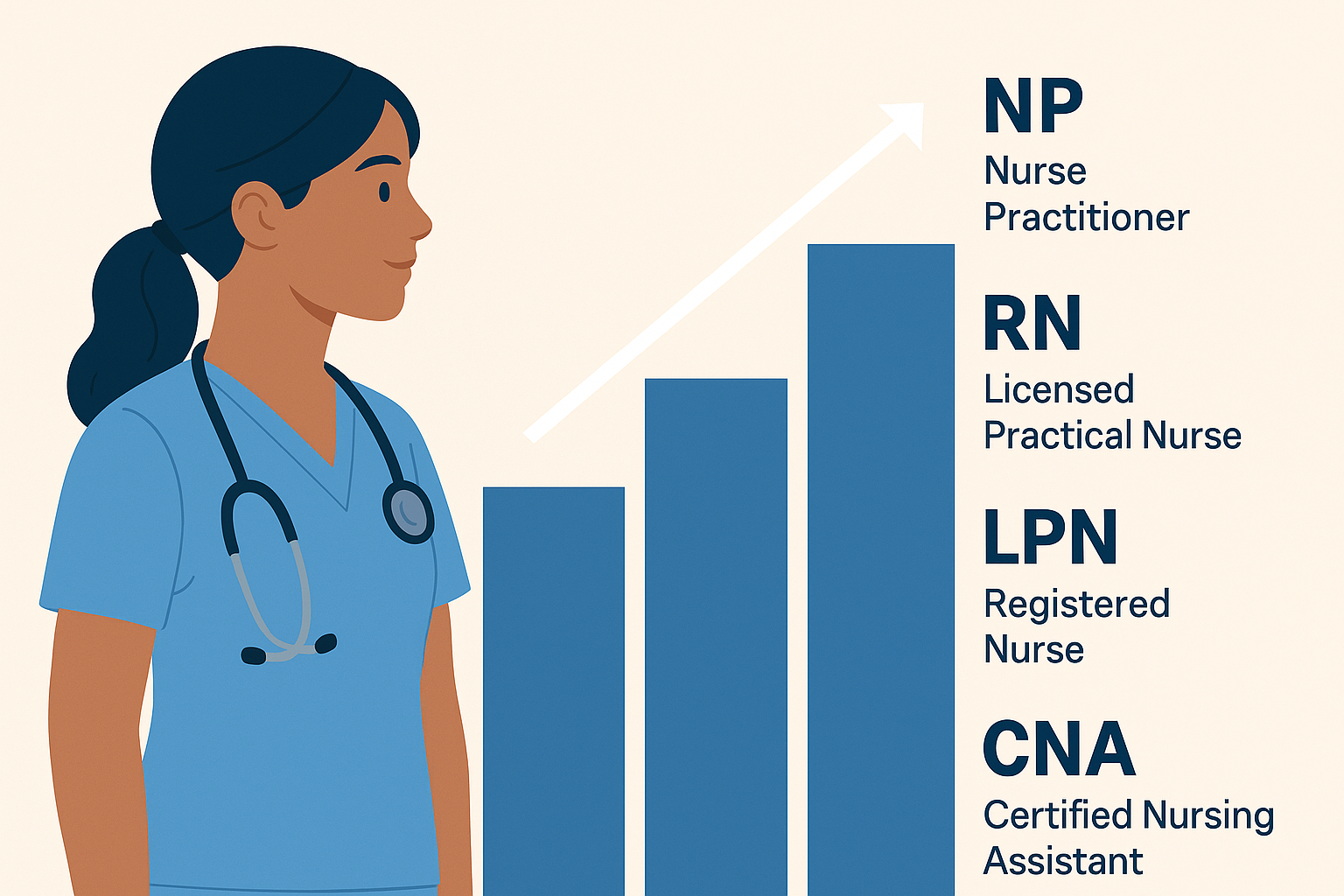
Table of Contents
Why Choose Nursing?
Before diving into specific roles, it’s worth exploring why so many people pursue a nursing career:
- High Demand and Job Security – The U.S. Bureau of Labor Statistics projects nursing jobs to grow faster than the average for all occupations. With an aging population and increased focus on healthcare, demand remains strong.
- Diverse Career Options – Nursing isn’t “one size fits all.” From bedside care to administrative roles to advanced practice, there are countless nursing career paths to explore.
- Strong Earning Potential – Even entry-level nursing careers offer competitive salaries compared to many other professions that require similar levels of education.
- Flexible Work Settings – Nurses can work in hospitals, outpatient clinics, nursing homes, schools, research facilities, and even from home through telehealth.
- Personal Fulfillment – Nursing allows you to directly impact people’s lives, offering both professional satisfaction and emotional rewards.
Understanding Nursing Career Paths
When exploring nursing career options, it’s important to understand that nursing is structured around levels of education, licensure, and specialization. Here’s a breakdown of the most common types of nursing careers starting at the entry level:
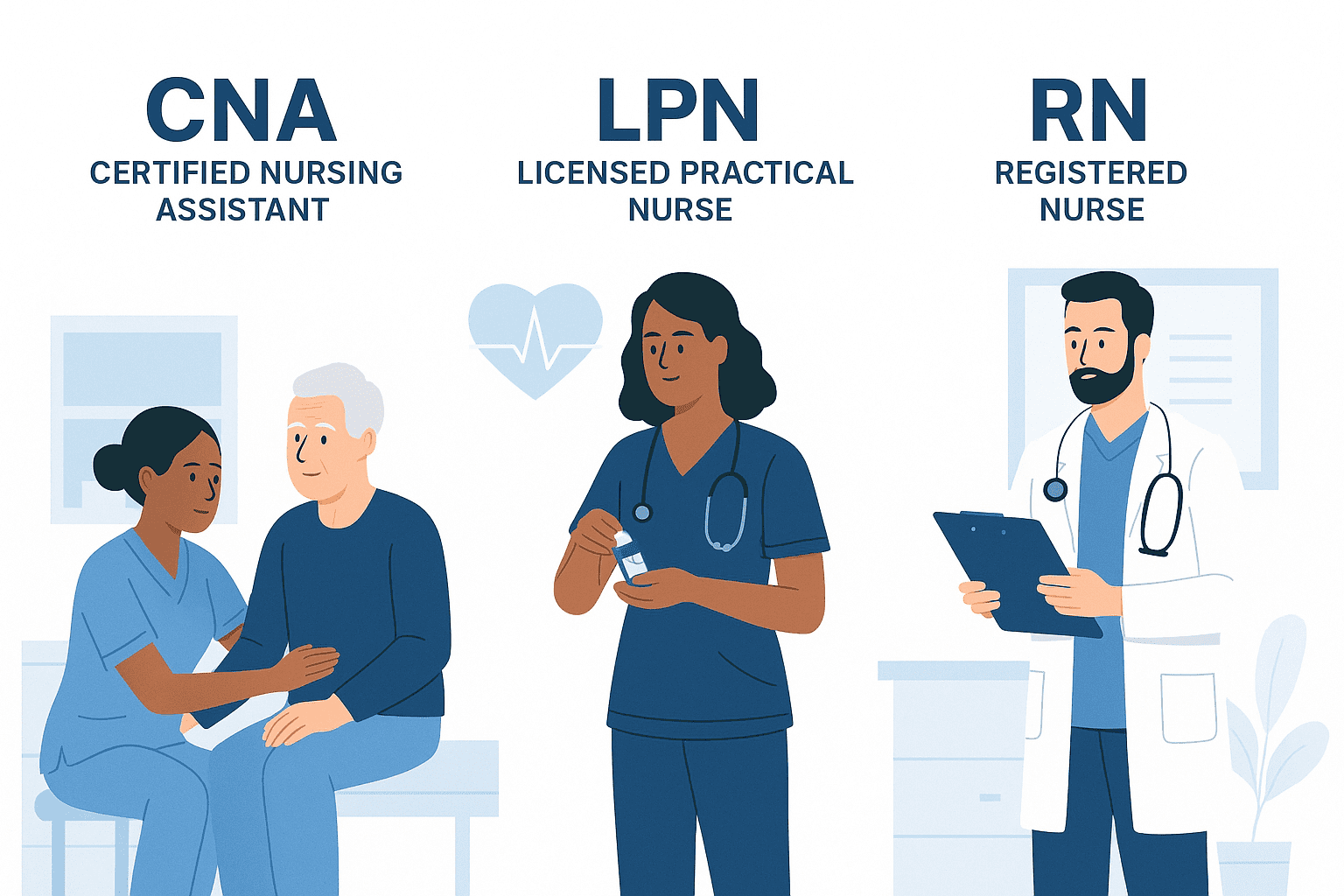
- Certified Nursing Assistant (CNA) – The first step for many aspiring nurses.
- Licensed Practical Nurse (LPN) / Licensed Vocational Nurse (LVN) – A quick path to bedside care.
- Registered Nurse (RN) – The most recognized and versatile nursing role.
- Advanced Practice Registered Nurse (APRN) – Includes Nurse Practitioners, Clinical Nurse Specialists, Nurse Midwives, and Nurse Anesthetists.
For this guide, we’ll focus primarily on entry-level nursing careers and the early stages of the nursing journey.
Entry-Level Nursing Careers
1. Certified Nursing Assistant (CNA)

Overview
CNAs provide basic patient care under the supervision of RNs or LPNs. Duties include helping patients with daily activities such as bathing, feeding, mobility, and monitoring vital signs.
Education & Requirements
- Completion of a state-approved CNA program (typically 4–12 weeks).
- Passing a competency exam.
Average Salary
- Around $30,000–$36,000 per year (varies by state).
Career Growth
Many CNAs go on to become LPNs or RNs. This role offers hands-on experience and is a great stepping stone in nursing career paths.
2. Licensed Practical Nurse (LPN) / Licensed Vocational Nurse (LVN)
Overview
LPNs (or LVNs in Texas and California) provide direct patient care, including administering medications, checking vitals, dressing wounds, and reporting patient status to RNs and physicians.
Education & Requirements
- Completion of a one-year diploma or certificate program.
- Must pass the NCLEX-PN exam.
Average Salary
- Around $48,000–$55,000 per year.
Career Growth
LPNs can transition into RN roles by pursuing an Associate Degree in Nursing (ADN) or Bachelor of Science in Nursing (BSN).
3. Registered Nurse (RN)
Overview
RNs make up the backbone of the healthcare system. They coordinate patient care, administer treatments, provide patient education, and supervise CNAs and LPNs.
Education & Requirements
- Two main pathways:
- ADN (Associate Degree in Nursing): 2 years.
- BSN (Bachelor of Science in Nursing): 4 years.
- Must pass the NCLEX-RN exam.
Average Salary
- Around $75,000–$85,000 per year, with higher salaries in specialized units or metropolitan areas.
Career Growth
RNs have access to the widest variety of nursing career options, including leadership roles, specialized care, and graduate-level education leading to
Learn more about the Differences between CNA vs LPN vs RN Programs.
Specialized Nursing Career Options for Beginners

Even within entry-level nursing careers, there are many ways to specialize depending on interests and setting. Some examples include:
- Pediatric Nursing – Working with children in hospitals or clinics.
- Geriatric Nursing – Providing care for older adults in nursing homes or assisted living facilities.
- Emergency Nursing – Fast-paced care in ER settings.
- Home Health Nursing – Offering care in patients’ homes.
- School Nursing – Providing care in educational settings.
Specializations often come later in the career, but many nurses start their journey with a focus in one of these areas.
Read our Complete Guide to Entry-Level Nursing Programs for more nursing degree options.
Salaries Across Nursing Career Paths
Here’s a quick salary snapshot across types of nursing careers:
| Role | Average Salary | Education Level |
|---|---|---|
| CNA | $30,000–$36,000 | Certificate |
| LPN/LVN | $48,000–$55,000 | Diploma/Certificate |
| RN (ADN) | $75,000–$80,000 | Associate Degree |
| RN (BSN) | $80,000–$90,000 | Bachelor’s Degree |
| Nurse Practitioner (NP) | $110,000–$125,000 | Master’s/Doctorate |
| Nurse Anesthetist (CRNA) | $190,000–$220,000 | Master’s/Doctorate |
Even at the entry level, nursing salaries are competitive, and pay rises significantly with education and specialization.
Growth Opportunities in Nursing
One of the biggest advantages of choosing a nursing career is upward mobility. Here’s how the progression often looks:
- Start as a CNA or LPN – Gain direct patient care experience.
- Advance to RN – Through ADN or BSN programs.
- Pursue a BSN or higher – Many hospitals now prefer or require BSN-prepared nurses.
- Graduate Education – Master’s or Doctorate to become a Nurse Practitioner, Nurse Educator, or Nurse Anesthetist.
- Leadership Roles – Nurse Manager, Director of Nursing, or Chief Nursing Officer.
This structured growth makes nursing one of the most versatile and sustainable career paths in healthcare.
Education Pathways for Entry-Level Nursing Careers

- Certificate Programs (CNA, LPN/LVN): Quick entry into the workforce, usually under 1 year.
- Associate Degree in Nursing (ADN): Affordable and faster (2 years).
- Bachelor of Science in Nursing (BSN): The gold standard for RNs, offering the best job prospects.
- Bridge Programs: Designed for LPN-to-RN, RN-to-BSN, or accelerated BSN programs for those with prior degrees.
The educational path you choose will influence which nursing career options are available and how quickly you can advance.
Skills Needed for Success in Nursing
Regardless of role, certain skills are essential across all nursing career paths:
- Compassion and empathy for patient-centered care.
- Critical thinking to assess and respond quickly.
- Communication skills to collaborate with teams and educate patients.
- Physical stamina for long shifts.
- Adaptability in dynamic healthcare environments.
Future Outlook for Nursing Careers
The nursing field is projected to continue growing:
- RN demand is expected to grow by 6% through 2032.
- Advanced practice nursing roles (like Nurse Practitioners) are expected to grow by over 40%.
- Telehealth and digital health are creating new nursing career options in virtual care.
This strong outlook makes entry-level nursing jobs one of the most future-proof career choices.
How to Choose the Right Nursing Career Path
Choosing between different types of nursing careers depends on your:
- Timeline – How quickly do you want to enter the workforce?
- Education level – Are you willing to pursue a 2- or 4-year degree?
- Salary goals – Are you looking for quick entry or long-term earning potential?
- Work setting preferences – Do you prefer hospitals, schools, home care, or specialized units?
Related: High-Demand States for Entry-Level Nurses
The world of nursing offers countless opportunities for growth, stability, and impact. Starting with entry-level nursing careers such as CNA, LPN, or RN, you can build a fulfilling career with strong salaries and a wide range of nursing career options.
Whether you want to advance into specialized fields, leadership roles, or advanced practice, nursing provides a clear ladder of opportunity. By exploring different nursing career paths, you can choose the role that best fits your skills, interests, and long-term goals.
If you’re ready to begin your journey, the first step is choosing the right educational pathway—and from there, the possibilities are endless.