

If you’re exploring a nursing career, one of your biggest questions is likely: How much do nurses make at each degree level?
Understanding nursing salaries for CNAs, LPNs, RNs, and BSN-prepared nurses can help you choose the right education path, estimate your future earnings, and plan a long-term career strategy. Salaries vary based on education, experience, work setting, and location, but one pattern is clear: higher degrees generally lead to higher earnings and greater career flexibility.
Nursing Salaries at a Glance (CNA → LPN → RN → BSN)
| Role / Degree Level | Education Required | Median Annual Salary | Median Hourly Rate |
|---|---|---|---|
| Certified Nursing Assistant (CNA) | Short certificate program | $39,530 | $18.99/hr |
| Licensed Practical/Vocational Nurse (LPN/LVN) | 1-year diploma | $62,340 | $29.97/hr |
| Registered Nurse (RN – ADN or BSN) | Associate or bachelor’s degree | $93,600 | ~$45/hr |
| BSN-Prepared RN | Bachelor of Science in Nursing | Typically higher than ADN, often mid-to-high $90Ks |
Author Insight
In my research reviewing national nursing workforce data and speaking with nurses and students across CNA, LPN, RN, and BSN pathways, one theme appears again and again: salary growth closely follows educational advancement. Nurses often tell me their biggest income jumps happened when they moved from LPN to RN or from RN to BSN, especially when these transitions opened doors to hospital roles or specialty units. This real-world pattern aligns consistently with national salary trends and underscores why choosing the right degree path matters.
CNA Salary Overview
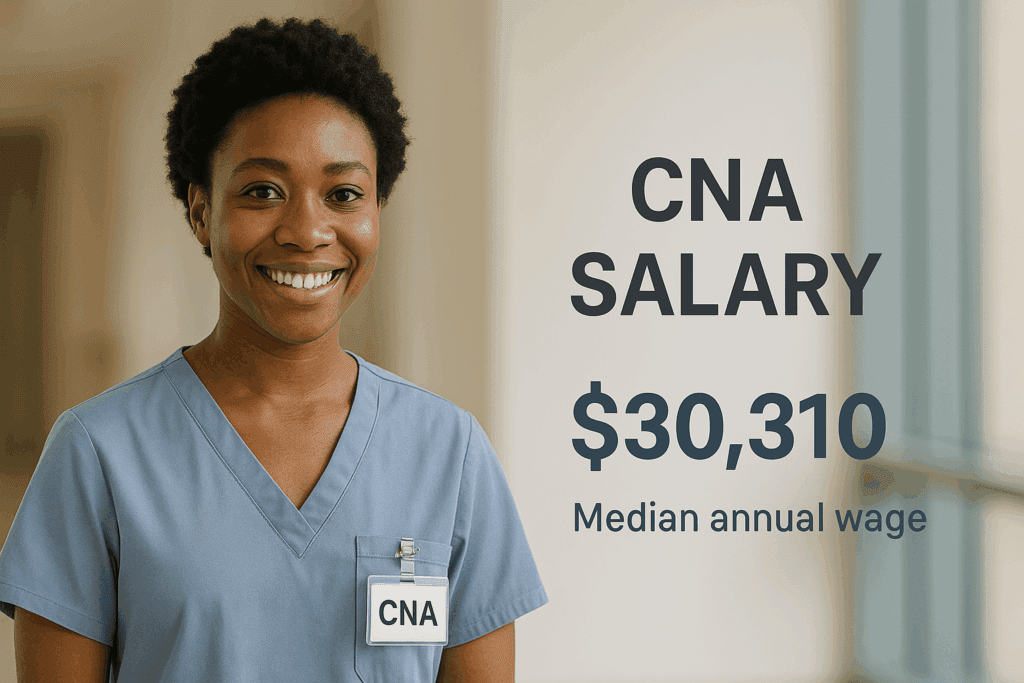
Certified Nursing Assistants provide essential patient care support. They help patients with daily living activities, positioning, safety, and comfort.
How Much Do CNAs Make?
- Median annual salary: ≈ $39,530
- Hourly rate: ≈ $19/hr
- CNAs in hospitals and government facilities earn the highest wages.
- Salaries can exceed $50,000+ in top-paying states.
To learn how to become a CNA quickly read our CNA Career Path Guide, and explore accredited CNA programs near you to compare start dates and tuition.
LPN/LVN Salary Overview

LPNs/LVNs take a step up from CNA responsibilities, providing basic nursing care under RN or physician supervision.
How Much Do LPNs Make?
- Median salary: ≈ $62,340
- Top earners make $75,000+
- High-paying states include California, Washington, Rhode Island, and others.
Many LPNs I’ve spoken with report that moving to home health increased their income faster than facility-based roles. If this role aligns with your goals, compare accredited LPN programs to find the right training path.
RN Salary Overview (ADN or BSN)

Registered Nurses provide assessments, direct patient care, education, medication administration, and care coordination.
How Much Do RNs Make?
- Median RN salary: $93,600
- Top 10% exceed $135,000
- Highest-paying settings include:
- Outpatient care centers
- Specialty hospitals
- Government roles
RNs I’ve interviewed often say the salary jump from LPN to RN happened quicker than they expected. If you’re considering becoming a registered nurse, you can review accredited ADN programs to compare curriculum length, tuition, and admissions requirements. Students seeking broader career opportunities may benefit from exploring BSN programs, which offer expanded clinical training and long-term salary growth.
BSN Salary Overview

While ADN and BSN nurses qualify for the same RN license, employers typically prefer BSN graduates for specialized units and leadership tracks.
How Much Do BSN Nurses Make?
- Many sources show BSN salaries in the mid–high $90Ks.
- BSN benefits include:
- Faster promotions
- Higher-paying specialties
- Access to clinical leadership roles
- Eligibility for NP or CRNA programs
ou can compare earnings for associate- and bachelor-prepared nurses in our ADN vs. BSN guide, which outlines salary differences and hiring trends.
Which Degree Leads to the Highest Nursing Salaries?
Salary progression typically looks like:
- CNA → LPN: +$20,000 or more
- LPN → RN: +$30,000 or more
- RN → BSN RN: modest up-front increase, significant long-term potential
If you want to maximize lifetime earnings, the BSN provides the strongest combination of pay, flexibility, and future opportunity.
Factors That Influence Nursing Salaries
1. Location
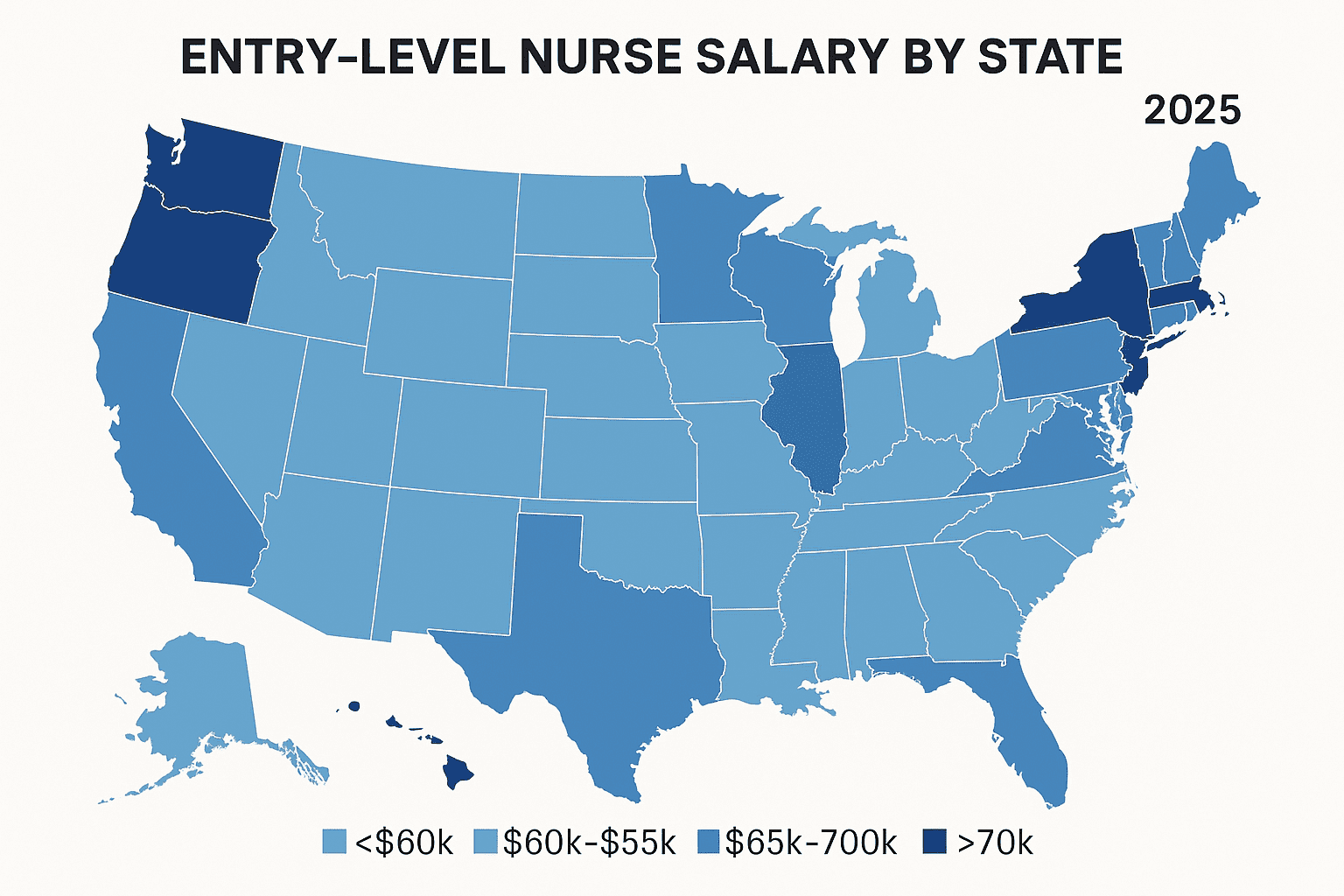
States such as California, Washington, Massachusetts, and New York consistently pay the highest nursing salaries. For localized salary insights, explore our Nursing Salaries by State resource, which compares wages across the U.S.
2. Work Setting
High-paying environments include:
- Hospitals
- Outpatient surgery or specialty centers
- Government facilities
Lower-paying roles include:
- Nursing homes
- Community clinics
- School nursing
3. Specialty Certifications
Certifications can increase pay and job mobility:
- CCRN
- CNOR
- OCN
- WOCN
4. Shift Differentials
Night/weekend shifts and overtime often significantly increase nurse income. Nurses consistently tell me that shift differentials are one of the fastest ways to increase income early in your career.
Salary Trends: 2024–2026 Outlook
Nursing salaries are expected to rise steadily through 2026, driven by workforce shortages, increased patient demand, and growing national emphasis on highly trained nursing staff. While the rate of wage growth varies by role and region, several clear trends are emerging across the U.S. healthcare system:
1. RN and BSN salaries are projected to grow the fastest.
Hospitals continue prioritizing BSN-prepared nurses to meet Magnet status requirements and fill specialty roles. Many systems are offering:
- Higher sign-on bonuses
- Accelerated salary steps
- Tuition reimbursement for ADN-to-BSN completion
As a result, RN and BSN salaries are forecast to increase 3–7% annually in most regions.
2. LPN demand is rebounding, especially in outpatient and long-term care settings.
From 2020–2023, some hospital systems reduced LPN hiring. That trend is reversing.
LPN salaries are rising in:
- Home health
- Skilled nursing facilities
- Ambulatory clinics
Average LPN wages are expected to climb 2–4% per year through 2026 as providers address staffing shortages and shift more chronic care to outpatient settings.
3. CNA wages continue to rise due to high turnover and staffing mandates.
States such as California, New York, Illinois, and Pennsylvania are implementing stronger staffing minimums for long-term care facilities—raising CNA demand.
Most forecasts expect CNA wages to grow 2–5% annually, with higher increases in states adopting staffing regulations.
4. Geographic pay gaps are widening.
High-cost-of-living states (CA, WA, MA, NY) are increasing salaries faster than the national average.
Meanwhile, rural and low-cost regions are seeing slower growth.
This divergence affects all roles—CNA, LPN, RN, and BSN.
5. Nurses with specialty skills will see the largest pay boosts.
Across all levels, those who gain specialized training will benefit most. The strongest increases are projected in:
- Critical care
- OR / perioperative
- Emergency nursing
- Home health
- Behavioral health
- Long-term care leadership
These specialties are expected to outpace general nursing wage growth by 1–3% annually through 2026.
Bottom Line for Career Planning
From 2024 through 2026, nursing salaries are expected to increase across all degree levels, with the biggest gains among:
- BSN-prepared RNs,
- LPNs in home health or outpatient care, and
- CNAs working in states with staffing requirements.
Education level will remain the greatest predictor of salary growth—making degree advancement one of the most reliable ways to increase long-term earning potential in nursing.
How to Choose the Right Nursing Degree for Your Salary Goals
Ask yourself:
- Do I want to start earning quickly?
CNA or LPN may be ideal. - Do I want the best long-term salary potential?
BSN is the strongest investment. - Do I want advanced practice roles like NP or CRNA?
Start with a BSN, then pursue graduate education.
Turn Salary Data Into a Career Plan
No matter where you begin—CNA, LPN, ADN, or BSN—your degree dramatically impacts your earning potential and career trajectory.
Explore accredited programs to begin building your nursing future.
FAQ: Nursing Salaries by Degree
1. Do BSN nurses make more than ADN nurses?
Yes. While ADN and BSN graduates both qualify for the RN license, BSN-prepared nurses typically earn higher salaries over time. BSN nurses are more competitive for hospital roles, specialty units (ICU, ER, OR), leadership positions, and advanced practice programs—each of which leads to higher earning potential. In many states, BSN nurses earn several thousand dollars more per year than ADN-prepared RNs.
2. What nursing degree pays the most?
Among entry-level nursing degrees, the BSN leads to the highest salary and the strongest long-term career growth. Beyond the BSN, nurses who pursue graduate degrees—such as Nurse Practitioner (NP), Certified Registered Nurse Anesthetist (CRNA), or Clinical Nurse Specialist (CNS)—earn significantly higher salaries, often ranging from $110,000 to $200,000+.
3. How much do CNAs, LPNs, and RNs make?
- CNA salary: about $39,500 annually
- LPN/LVN salary: about $62,000 annually
- RN salary (ADN or BSN): about $93,600 annually
BSN-prepared RNs often land at the higher end of the RN pay scale.
4. What factors affect nursing salaries the most?
The biggest influencers on nursing salaries include:
- Education level (higher degrees → higher pay)
- Work setting (hospitals and outpatient centers pay more than nursing homes)
- Geographic location (California and coastal states pay the most)
- Specialty certifications
- Shift differentials (night/weekend pay)
- Years of experience
5. Is becoming an RN worth it financially?
For most people, yes. Becoming an RN significantly increases earning potential compared to CNA or LPN roles. The RN credential also unlocks career mobility, specialty roles, leadership opportunities, and pathways into advanced practice nursing. Over a full career, RNs and BSN-prepared nurses typically earn far more than lower-degree roles.
6. How can nurses increase their salary?
Nurses can boost their income by:
- Pursuing higher education (ADN → BSN → MSN)
- Taking on specialty certifications
- Working night/weekend shifts
- Moving into high-paying units (ICU, OR, NICU)
- Working in outpatient care or government roles
- Becoming a travel nurse or per-diem nurse
- Advancing to NP or CRNA roles
7. Which states pay nurses the highest salaries?
States with the highest nursing salaries typically include:
- California
- Washington
- Oregon
- New York
- Massachusetts
Urban and high–cost-of-living areas almost always pay significantly more than rural regions.
8. Does experience impact nurse salary?
Absolutely. A nurse’s salary can increase substantially over time. Nurses often see jumps in pay at 5-, 10-, and 20-year experience marks, especially when combined with specialty skills or leadership roles. Even within the first two years, many nurses receive raises as they gain confidence and competency.
9. What is the fastest way to increase nursing salary?
The quickest options include:
- Moving to a higher-paying facility or hospital system
- Earning a BSN or enrolling in an RN-to-BSN bridge
- Picking up night/weekend differentials
- Getting specialty certifications
- Transitioning to a travel nursing role
Travel nurses, in particular, can earn far more than standard staff nurses.
10. Should I choose CNA or LPN as a stepping-stone career?
Both are valid paths.
- CNA: Fastest entry into healthcare; lowest cost; helpful if you want early patient-care exposure.
- LPN: Higher salary; more autonomy; easier transition into RN through LPN-to-RN bridge programs.
If long-term salary is the priority, consider LPN → RN → BSN or entering a direct RN/BSN program if financially possible. Ready to begin your nursing journey? Use our tool to find nursing programs near you and compare degree options that fit your goals.
Disclaimer: Salary data reflects national averages and may vary by state, employer, and experience. This article is for educational purposes only and does not guarantee future earnings.
About the Author
Gary Bean — Nursing Education Researcher & Career Insights Writer
Gary Bean is a healthcare education researcher and career insights writer specializing in nursing pathways, workforce trends, and salary analysis. He has researched nursing education and workforce data for several years, interviewing nurses, students, and educators to understand how degree choice impacts salaries and career outcomes..
Gary’s work emphasizes clarity, transparency, and data-backed guidance, with a focus on helping readers understand how education, experience, and credentials impact long-term earning potential in the nursing field. He regularly reviews nursing salary data from the U.S. Bureau of Labor Statistics, workforce reports, and academic research to produce accessible, accurate resources for students exploring CNA, LPN, RN, and BSN programs.
Dedicated to building high-quality, trustworthy content, Gary ensures that every article reflects current industry trends, practical nursing insights, and evidence-based career recommendations.
Medical & Career Review Process
This article undergoes a structured editorial review that includes:
- Verification of salary data against U.S. Bureau of Labor Statistics (BLS) and national compensation studies
- Confirmation of degree-level education pathways and career requirements
- Reviewed by a nurse educator and a senior clinical professional
- Annual updates to reflect the latest BLS data and nursing career trends
Data Sources & Methodology
Salary and job-growth data are sourced from:
- U.S. Bureau of Labor Statistics (BLS)
- National nursing salary surveys
- State workforce and labor reports
- Accredited nursing programs for degree timelines
Salary figures represent national averages or medians unless otherwise noted. Actual pay varies by experience, specialty, employer type, and location.
Editorial Independence & Integrity
AllNurseSchools.com maintains strict editorial standards:
- No salary figures are influenced by advertisers or school partners
- All content is created for prospective nursing students
- All recommendations are transparent, evidence-based, and unbiased
Last Updated
12/8/25