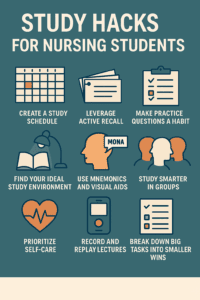

Discover practical mental health tips for nursing students and new nurses. Learn how to manage nursing student stress, set boundaries, and build resilience.
Starting a career in nursing is exciting and rewarding, but it can also be overwhelming. The transition from student to professional nurse often comes with long shifts, emotionally challenging situations, and steep learning curves. While nursing offers the chance to make a difference in patients’ lives, it’s important to recognize that the pressure can take a toll on your well-being. By building healthy habits early, new nurses can protect their mental health and thrive in their careers.
Table of Contents
Acknowledge and Address Nursing Student Stress
The reality is that stress doesn’t end once you graduate from nursing school—it simply changes form. Many new nurses find themselves facing similar pressures to those they experienced as students, such as balancing long hours, mastering new skills, and managing expectations from instructors or supervisors.
Acknowledging nursing student stress as a foundation for understanding your future challenges is critical. When you recognize how you responded to stress during school, you can develop strategies to avoid burnout as a new nurse. For example, if you found yourself overwhelmed by exam preparation, consider how that same tendency might surface during what nursing clinicals are like and prepare coping strategies in advance.
Prioritize Sleep and Rest
Sleep is often the first thing sacrificed in both nursing school and early career nursing. However, lack of rest significantly impacts mood, focus, and decision-making. Commit to creating a healthy sleep routine—even with rotating shifts.
Tips to improve rest include:
- Using blackout curtains to sleep during the day after night shifts.
- Practicing short relaxation exercises before bed.
- Limiting screen time in the hour before sleeping.
Protecting your rest will not only improve your mental health but also enhance your performance at work.
Build a Support System
Nursing is a team-based profession, but it can sometimes feel isolating. Having a strong support system is essential. Seek out relationships with fellow new nurses, mentors, and even classmates who also experienced nursing student stress.
Outside of work, lean on family and friends who understand the demands of your schedule. Talking openly about your challenges reduces the stigma around stress and mental health struggles. If you find yourself consistently overwhelmed, consider professional counseling or employee assistance programs many hospitals provide.
Set Boundaries Between Work and Life
For new nurses, it’s tempting to say “yes” to every extra shift or to bring work-related stress home. However, setting boundaries is crucial for long-term mental well-being. Leave work concerns at the hospital whenever possible, and avoid overloading your schedule.
Simple habits—such as turning off work email notifications during your days off—help establish a healthy separation between professional and personal life. Combining boundaries with strong time management tips for nursing school can make it easier to protect your energy and prevent burnout.
Practice Stress-Management Techniques
Incorporating simple daily practices into your routine can help reduce anxiety and promote resilience. Some proven mental health tips for nursing students and new nurses include:
- Deep breathing exercises before or after a stressful shift.
- Mindfulness or meditation apps to help reset your focus.
- Physical activity, even light stretching or a short walk, to release tension.
- Journaling, which allows you to process emotions privately.
By practicing these techniques consistently, you train your body and mind to handle stressful moments more effectively.
Use Resources Available to You
Many hospitals and nursing schools provide resources to support mental health. Employee wellness programs, peer-support groups, and stress management workshops are designed specifically to help healthcare workers maintain balance.
Financial strain can also contribute to stress. Exploring nursing scholarships for entry-level students or employer nursing tuition reimbursement programs can relieve the pressure of paying for school or advancing your degree. Using mental health resources for nurses doesn’t show weakness—it shows a commitment to providing the best care possible for your patients by first taking care of yourself.
Most Rewarding Profession
Nursing is one of the most rewarding professions, but it comes with unique stressors. By recognizing the impact of nursing student stress, building a support system, practicing healthy boundaries, and using proven mental health tips for nursing students, you’ll be better prepared to enter your career with resilience and confidence. Protecting your mental health early sets the foundation for a long, fulfilling nursing career.