
Discover nursing tuition reimbursement programs and hospitals that pay for nursing school. Learn how tuition assistance works, eligibility, and tips to balance work and school
The cost of nursing school can feel overwhelming, but one resource many students overlook is employer tuition assistance. Nursing tuition reimbursement programs are designed to help aspiring and current nurses pay for their education while committing to work with a healthcare organization. You can start with healthcare jobs no degree. Understanding how these programs work—and which hospitals and healthcare systems offer them—can make nursing school far more affordable for students exploring how to afford nursing school.
Table of Contents
What Are Nursing Tuition Reimbursement Programs?
Tuition reimbursement is a benefit some employers offer to help staff cover the costs of higher education. In nursing, these programs are often part of broader recruitment and retention strategies. Healthcare facilities recognize that investing in their workforce improves patient care and reduces turnover, so they provide financial support for employees pursuing degrees, certifications, or advanced training.
For students, tuition reimbursement means the ability to offset tuition costs in exchange for a work commitment, making it easier to graduate with less debt. The American Nurses Association (ANA) notes that employer-supported education is one of the most effective tools for retaining skilled nurses.
How Nursing Tuition Reimbursement Programs Work
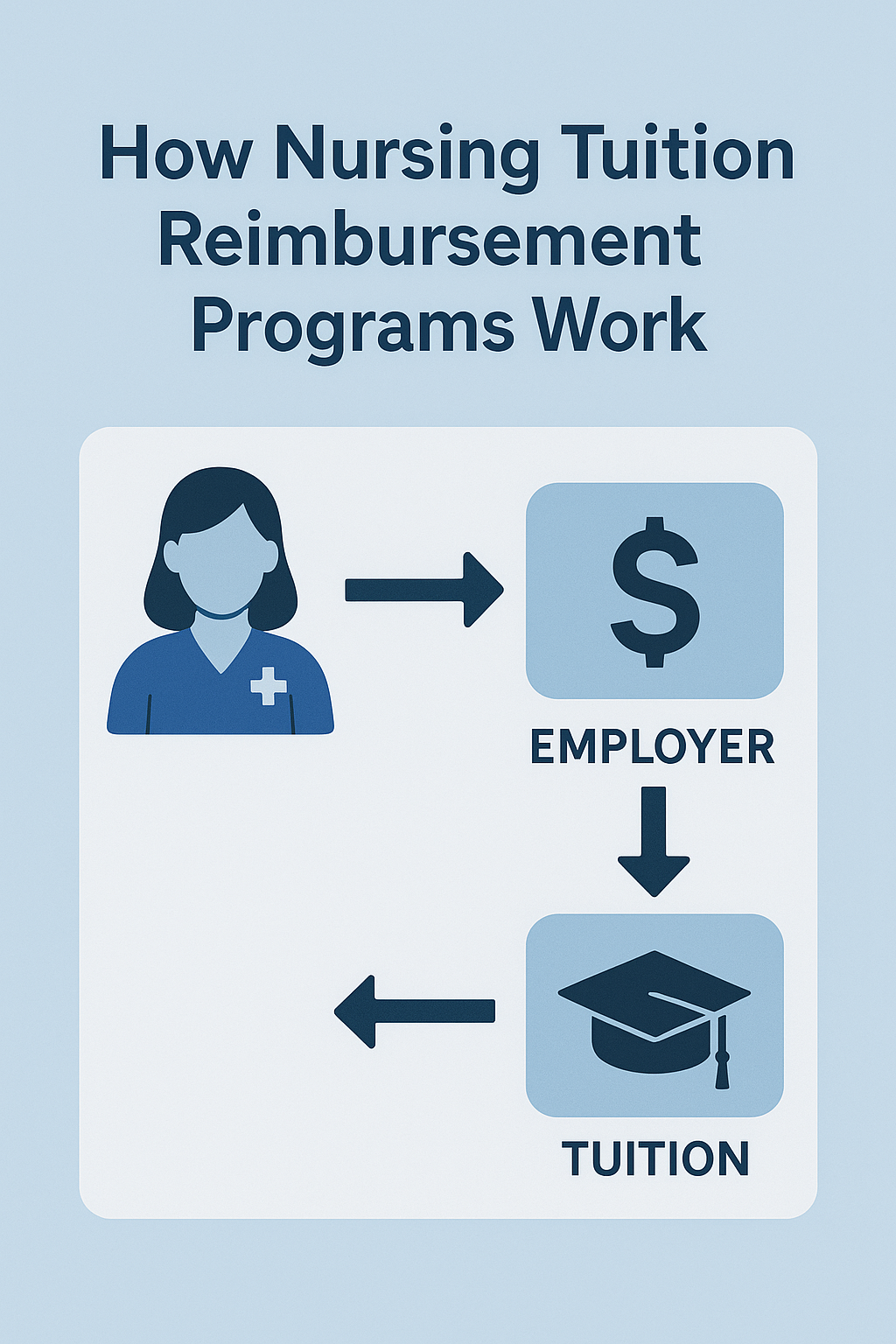
While details vary between organizations, most programs have common features:
- Eligibility Requirements
Employees typically must work a minimum number of hours per week to qualify. Many programs are open to full-time staff, but some extend benefits to part-time employees as well. - Covered Expenses
Programs usually reimburse tuition, but some may also cover textbooks, fees, or certification exams. - Annual or Lifetime Limits
Employers often set a maximum annual reimbursement amount (for example, $5,000 per year) or a lifetime cap. - Work Commitment
In return for funding, participants usually agree to remain employed with the organization for a certain period—often one to three years. Leaving early may require repayment. - Approved Programs
Nursing tuition reimbursement programs usually require enrollment in accredited nursing schools or state-approved programs. Students beginning their careers with CNA certification requirements often find these programs helpful as they advance to higher levels of nursing. The U.S. Bureau of Labor Statistics provides valuable insights into which nursing roles are in highest demand, helping students align their education with workforce needs.
Examples of Hospitals That Pay for Nursing School
Many large healthcare organizations across the U.S. offer tuition reimbursement or even direct payment for nursing education. Here are a few well-known examples:
- Cleveland Clinic – Offers tuition reimbursement for eligible nurses pursuing associate, bachelor’s, and advanced nursing degrees.
- AdventHealth – Provides education assistance programs covering nursing and allied health fields.
- Mayo Clinic – Supports employees through tuition reimbursement and professional development funding.
- Kaiser Permanente – Offers financial assistance for nursing students and advanced practice nurses, with additional scholarships available.
- HCA Healthcare – Operates an education and reimbursement program that supports employees advancing their healthcare careers.
To explore more, the American Hospital Association frequently highlights member hospitals with strong workforce development programs, including tuition reimbursement. Many hospitals that pay for nursing school still require a strong application essay for acceptance
Tips for Maximizing Tuition Reimbursement
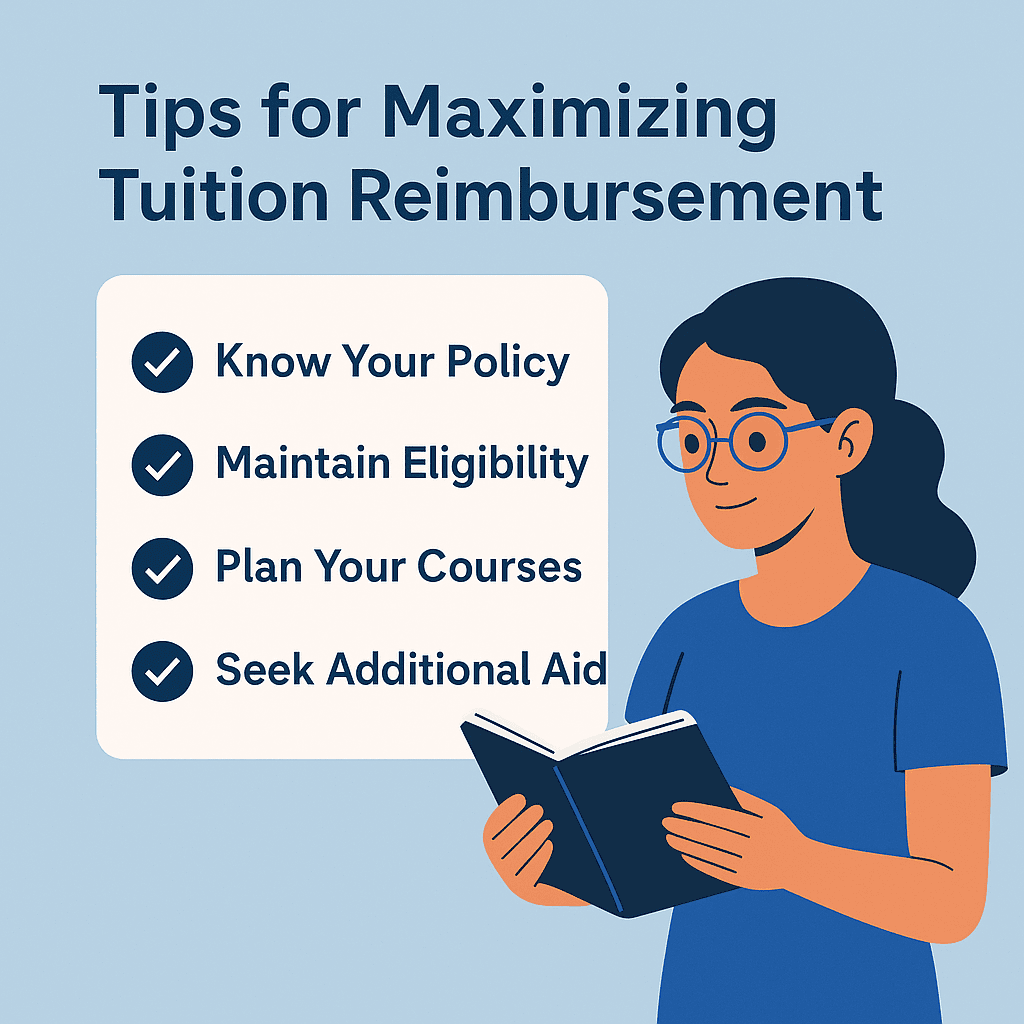
If you’re considering enrolling in nursing school while working, here are some strategies to make the most of your benefits:
- Confirm Eligibility Early
Speak with your human resources department to understand program requirements and whether your school is approved. - Plan Your Schedule
Balancing work and school can be challenging. Use strategies on how to balance nursing school and work to prevent burnout and ensure academic success. - Track Expenses
Keep receipts and documentation for tuition and fees. Employers generally require proof of payment and grades for reimbursement. - Maintain GPA Requirements
Many employers require you to maintain a minimum GPA (often 2.5 or higher) to stay eligible. - Understand Work Commitments
Be sure you are comfortable with the required employment commitment before accepting tuition funds.
The Value of Tuition Reimbursement Programs
Employer-funded education support can significantly reduce the financial burden of nursing school. In addition to covering tuition, these programs often include career development opportunities, mentorship, and pathways into specialized nursing roles.
For hospitals and healthcare systems, tuition reimbursement programs help address the ongoing nursing shortage while building employee loyalty. For students, they provide a practical way to enter or advance in the profession without being weighed down by debt.
Explore All Your Options
If you’re exploring how to finance your education, researching nursing tuition reimbursement programs should be at the top of your list. Many hospitals that pay for nursing school actively seek dedicated students and employees willing to grow within their organizations. You can also combine these programs with nursing scholarships for entry-level students to maximize financial support. By leveraging tuition assistance and planning ahead, you’ll be in a stronger position to pursue your career goals, go to nursing school debt free, and eventually take the next step, such as how to become a registered nurse.