

The Weight of Nursing School
If you’re in nursing school, you already know it’s not for the faint of heart. Between early-morning clinicals, endless reading assignments, and exams that seem to test your every nerve, it’s no wonder so many nursing students struggle with stress and burnout. You’re learning how to care for others — but that doesn’t mean your own mental health should take a back seat.
Stress in nursing school is not a personal failure; it’s a normal response to one of the most challenging and meaningful careers you can pursue. The key is recognizing when the stress becomes too much and knowing what mental health resources for nursing students are available to help you cope and build resilience.
Why Nursing Students Feel So Much Pressure
Most nursing students start this journey because they want to make a difference. That compassion is powerful, but it can also make you vulnerable to emotional exhaustion and nursing student burnout.

Between the long hours, academic workload, and emotional strain of clinical care, the line between motivation and burnout can get blurry. Add in financial stress, part-time jobs, and family obligations, and it’s easy to feel like you’re running on empty.
A 2023 study published in the Journal of Professional Nursing found that over 70% of nursing students report moderate to severe stress, often linked to balancing coursework and clinical demands (NIH Study on Nursing Student Mental Health). Recognizing this is the first step toward self-care — because you can’t pour from an empty cup.
When Stress Turns Into Something More
Feeling anxious before a big exam is normal. But if your anxiety never really goes away, or you find yourself feeling detached or hopeless, it might be time to pause and reach out for help.
Common signs of mental health challenges in nursing students include constant fatigue, trouble sleeping, loss of motivation, irritability, or difficulty focusing during clinicals. If these symptoms stick around for weeks or start affecting your studies or relationships, talk to someone.
That might mean reaching out to a campus counselor, your faculty advisor, or even a trusted classmate who understands what you’re going through. Many schools have on-campus mental health programs designed specifically for students in healthcare training — sometimes all you need to do is ask.
And if you ever feel like you’re in crisis, please don’t wait — call or text 988, the Suicide and Crisis Lifeline. You are not alone, and there are professionals ready to listen 24/7.
Finding Help: Where Nursing Students Can Turn
Your school’s student health center is usually the best starting point for mental health support in nursing school. Most universities offer free or low-cost counseling services, stress-management workshops, or access to therapists experienced in working with healthcare students.
If scheduling or privacy is a concern, online counseling platforms like BetterHelp or Talkspace make it easier to talk to a licensed therapist on your own time — even between classes or shifts.
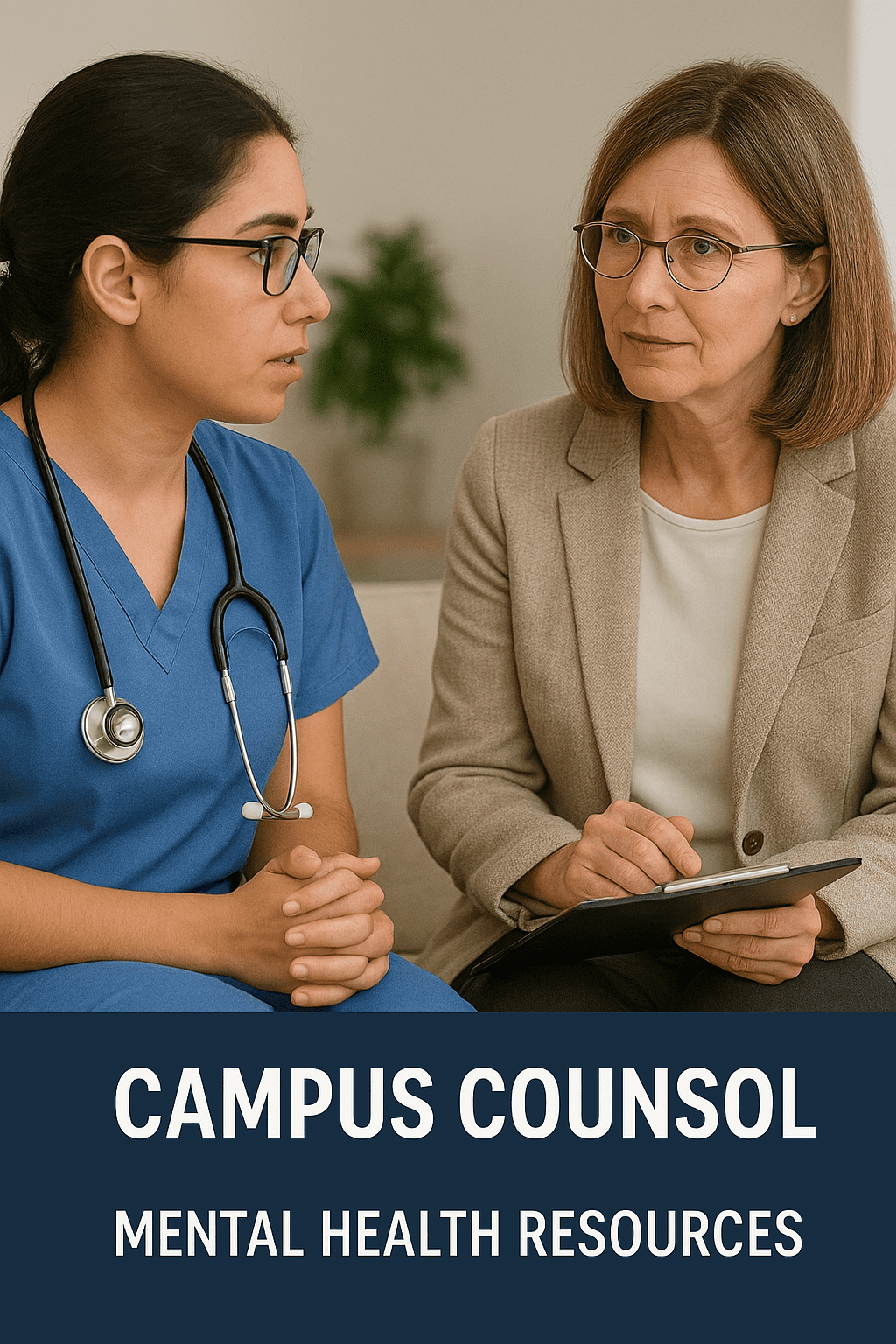
You can also explore professional wellness programs through organizations like the American Nurses Association’s Healthy Nurse, Healthy Nation initiative. They provide valuable stress management tools for nursing students, mindfulness training, and resilience-building exercises tailored to nurses and nursing students alike.
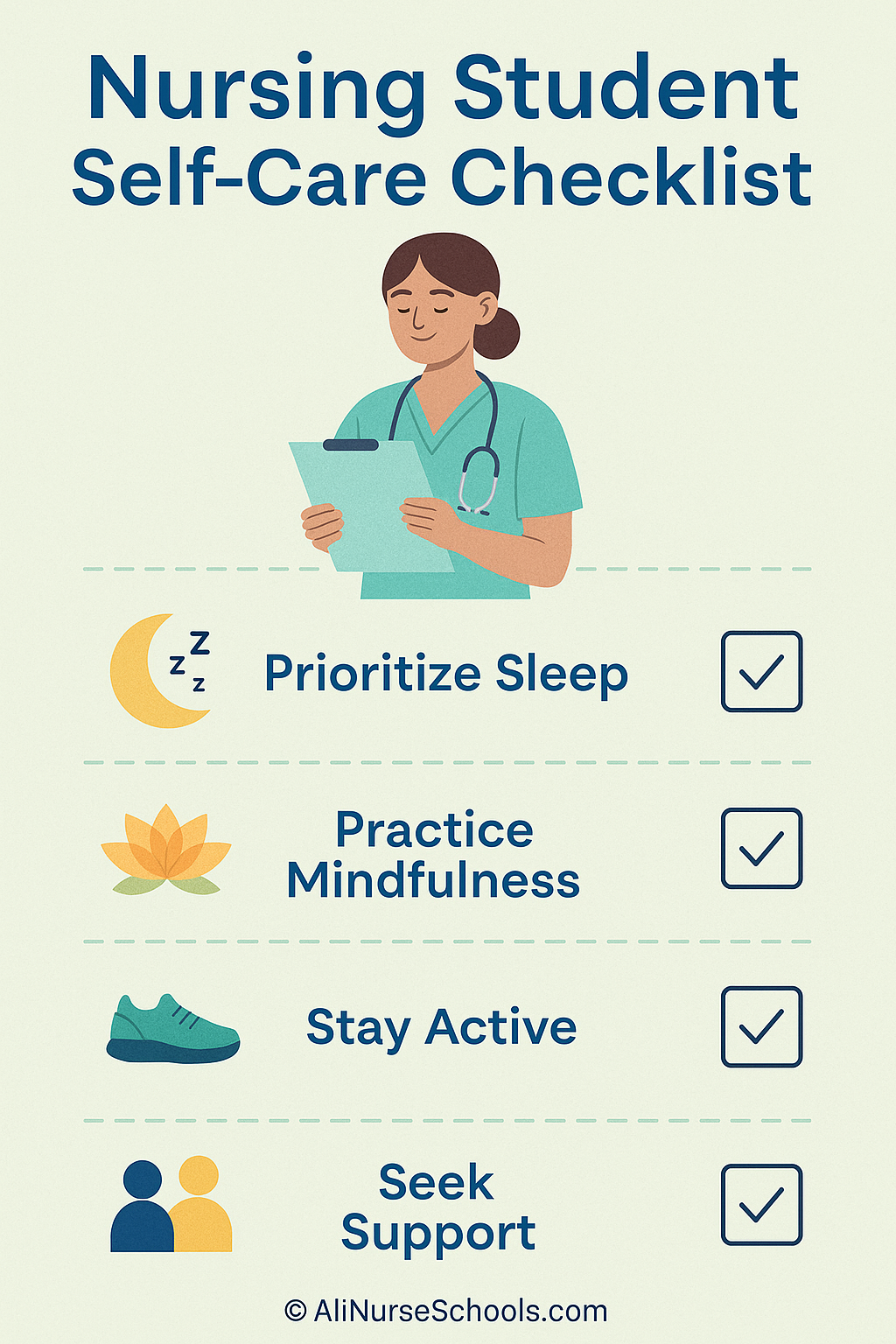
And don’t underestimate peer support. Sometimes, talking to someone who “gets it” — another nursing student who’s been through the same sleepless nights and clinical nerves — can make all the difference. Check if your program offers peer support groups for nursing students, or consider starting one if it doesn’t.
Everyday Habits That Protect Your Mental Health
There’s no single cure for stress in nursing school — it’s about small, consistent choices that protect your energy and mindset.
Start with sleep. It’s easy to pull all-nighters, but chronic exhaustion only makes anxiety worse. Aim for 7–8 hours whenever possible, even if that means saying “no” to extra shifts.
Nutrition matters too. Nursing students are infamous for surviving on caffeine and vending machines, but real food helps stabilize energy and mood. Keep snacks like fruit, yogurt, or trail mix in your bag during long clinicals.

Movement helps more than you think. Even a ten-minute walk after class can help release tension and clear your head. Apps like Headspace and Calm offer guided breathing exercises that fit between lectures or lunch breaks.
And don’t forget to unplug. Social media can add pressure and comparison, especially when you see classmates who seem to have it all figured out. It’s okay to log off and focus on your own journey.
(See also: Time Management Tips for Nursing Students for more ways to balance your schedule and mental health.)
Building Long-Term Resilience
Becoming a nurse means learning how to stay grounded in high-stress environments. That resilience doesn’t come from pushing through pain — it comes from practicing self-compassion and seeking support when you need it.
Join your school’s student nursing association or participate in wellness committees that advocate for mental health awareness. You’ll not only connect with peers but also gain leadership experience that looks great on your resume.
Reflecting on your purpose can also be grounding. When you feel exhausted, remind yourself why you started: to make a difference in people’s lives. Sometimes, reconnecting with that “why” can reignite your motivation when everything feels heavy.
For more strategies on staying mentally strong throughout your education, check out our guide on Essential Resources for Nursing Students.
Taking Care of Yourself isn’t Selfish — it’s Essential
Nursing school will test your limits, but it will also teach you what you’re capable of. Stress is inevitable — suffering in silence is not. There are countless mental health resources for nursing students, both on campus and online, waiting to support you.
Remember, taking care of yourself isn’t selfish — it’s essential. The compassion you’ll one day give to patients starts with the compassion you show yourself today.
If you’re struggling, reach out. Whether it’s to a friend, professor, or counselor, asking for help is a sign of strength — not weakness. You’ve already chosen one of the most meaningful careers there is. Don’t forget that you deserve the same care you give to others.