
If you’re exploring a path into nursing—whether as a first-time student or a working professional looking to advance—online nursing programs offer one of the most flexible and accessible ways to earn your degree. Over the past decade, nursing schools across the country have expanded their online options, allowing students to complete classroom learning from home while still getting the hands-on clinical training they need to become licensed RNs.
Today’s online nursing programs are accredited, respected by employers, and designed to support students who are balancing work, family, or other responsibilities. Understanding how they work, what they require, and how to choose the right one can help you make the best decision for your future career in nursing.
Table of Contents
How Online Nursing Programs Really Work
Unlike the idea many people have of “remote school,” online nursing education combines digital coursework with real-world clinical experience. Your lectures, discussions, assignments, tests, and group work happen through a virtual learning platform. Some programs offer asynchronous classes you complete on your own schedule, while others provide live sessions to mimic a traditional classroom experience.
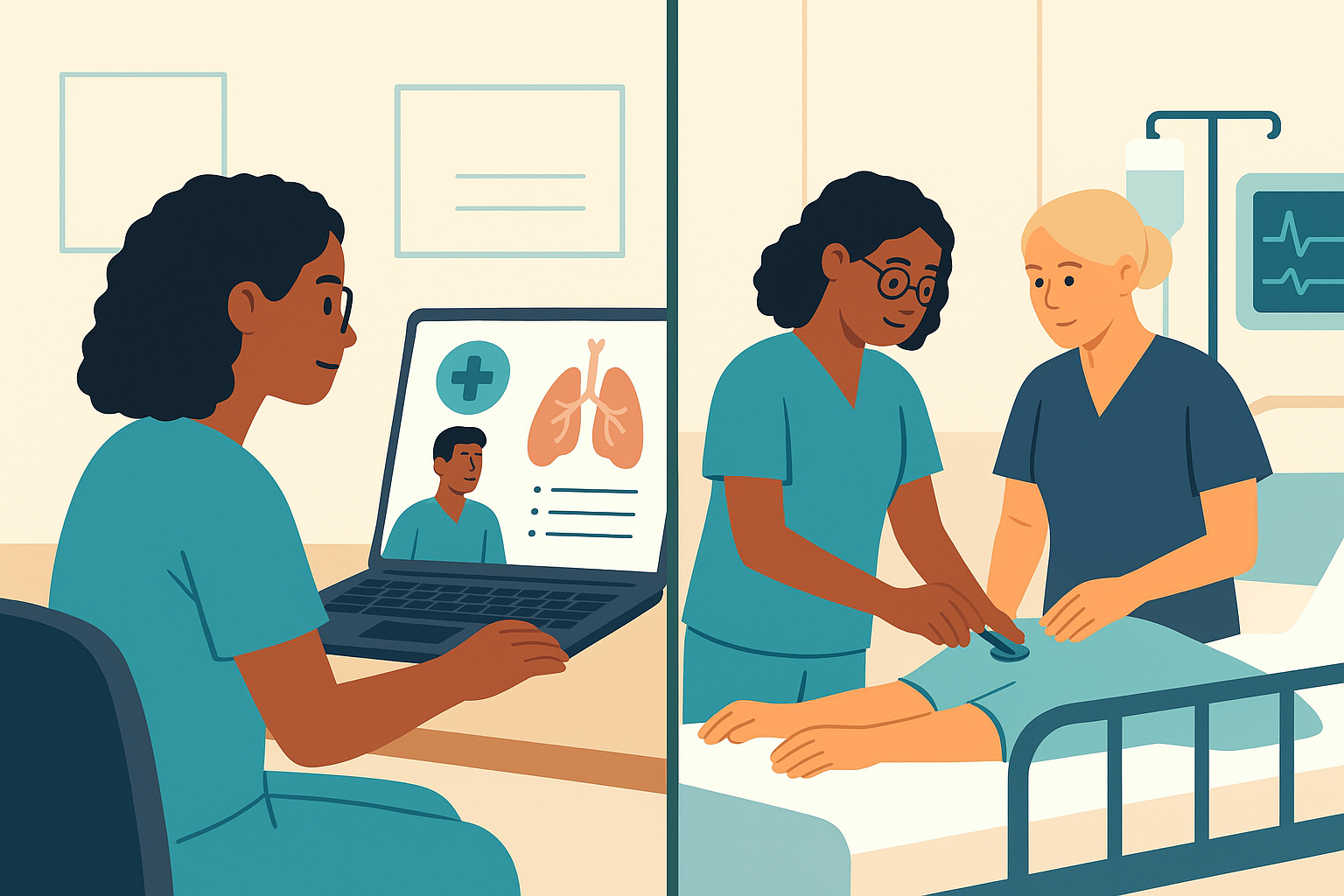
What doesn’t change is the hands-on component. Every accredited nursing program—online or on-campus—requires clinical hours in approved healthcare settings. Schools typically help coordinate placements at hospitals, clinics, long-term care facilities, or community health centers near you. For many students, this part of the program feels very similar to an on-campus nursing pathway.
If you want to understand the path to becoming licensed from start to finish, you can explore a full breakdown here:
👉 CNA vs LPN vs RN Programs: What’s the Difference?
Some online programs may require short campus visits for skills labs or competency check-ins. These are usually scheduled far in advance, making it easier for working adults or parents to plan around them. The combination of online coursework and in-person clinicals is what makes online nursing education flexible while still meeting strict professional standards.
Online Degrees Available for Aspiring Nurses
There’s an online option for nearly every stage of a nursing career. Many students begin with an online ADN program because it offers a faster route to NCLEX eligibility. Others choose an online BSN pathway, which is becoming the preferred entry-level degree among hospitals and healthcare systems nationwide.
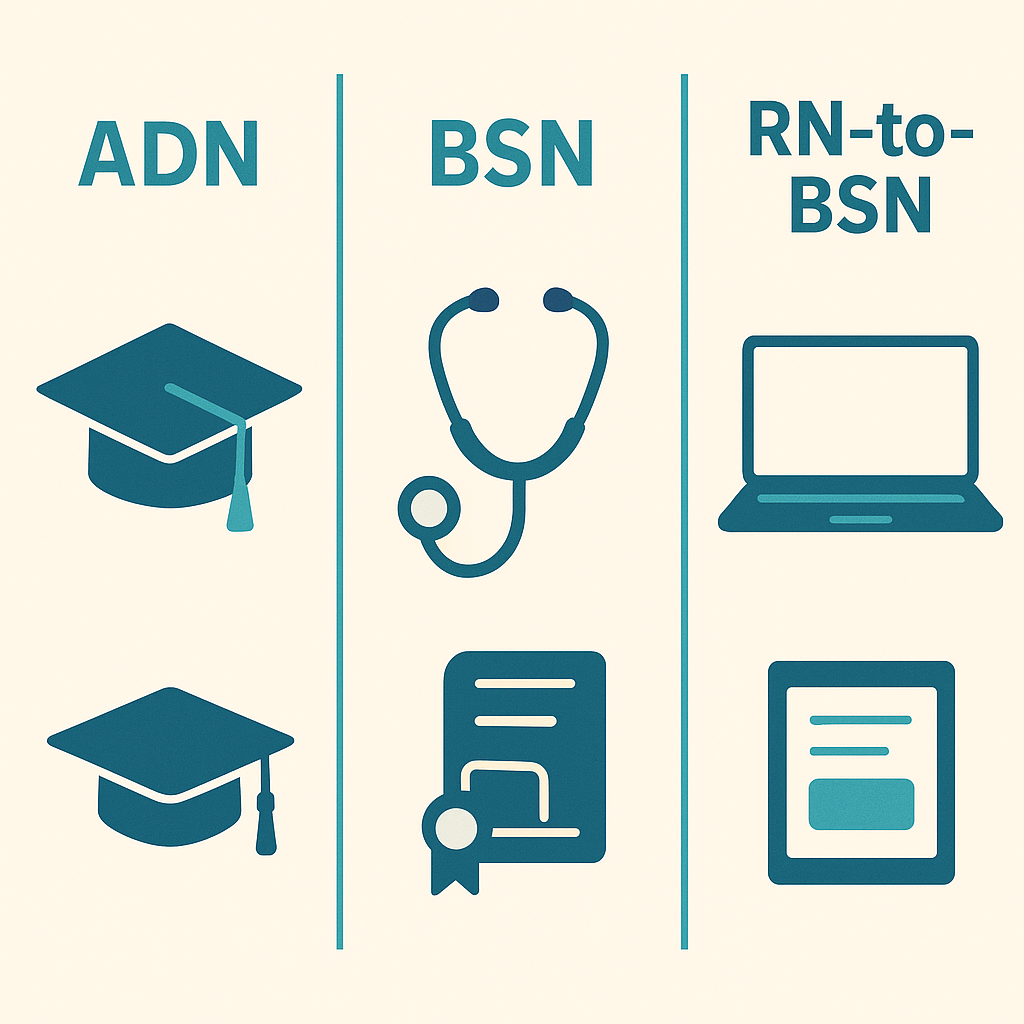
If you’re already a registered nurse, RN-to-BSN online programs are among the most popular and practical ways to advance professionally without stepping away from full-time work. At the graduate level, CNA to RN online programs, online MSN programs and online nurse practitioner programs allow you to specialize in high-demand fields such as family practice, psychiatric mental health, adult-gerontology, or nursing leadership.
Whether you’re just starting out or pursuing a specialized role, you can see how different entry-level pathways compare here:
👉 Best entry-level nursing programs
For many healthcare workers, these flexible pathways are what make nursing advancement achievable.
Accreditation: The Most Important Factor
Before applying to any program, make sure it’s accredited. Accreditation is what ensures your nursing education meets national standards—and that employers, state boards of nursing, and future graduate programs will recognize your degree.
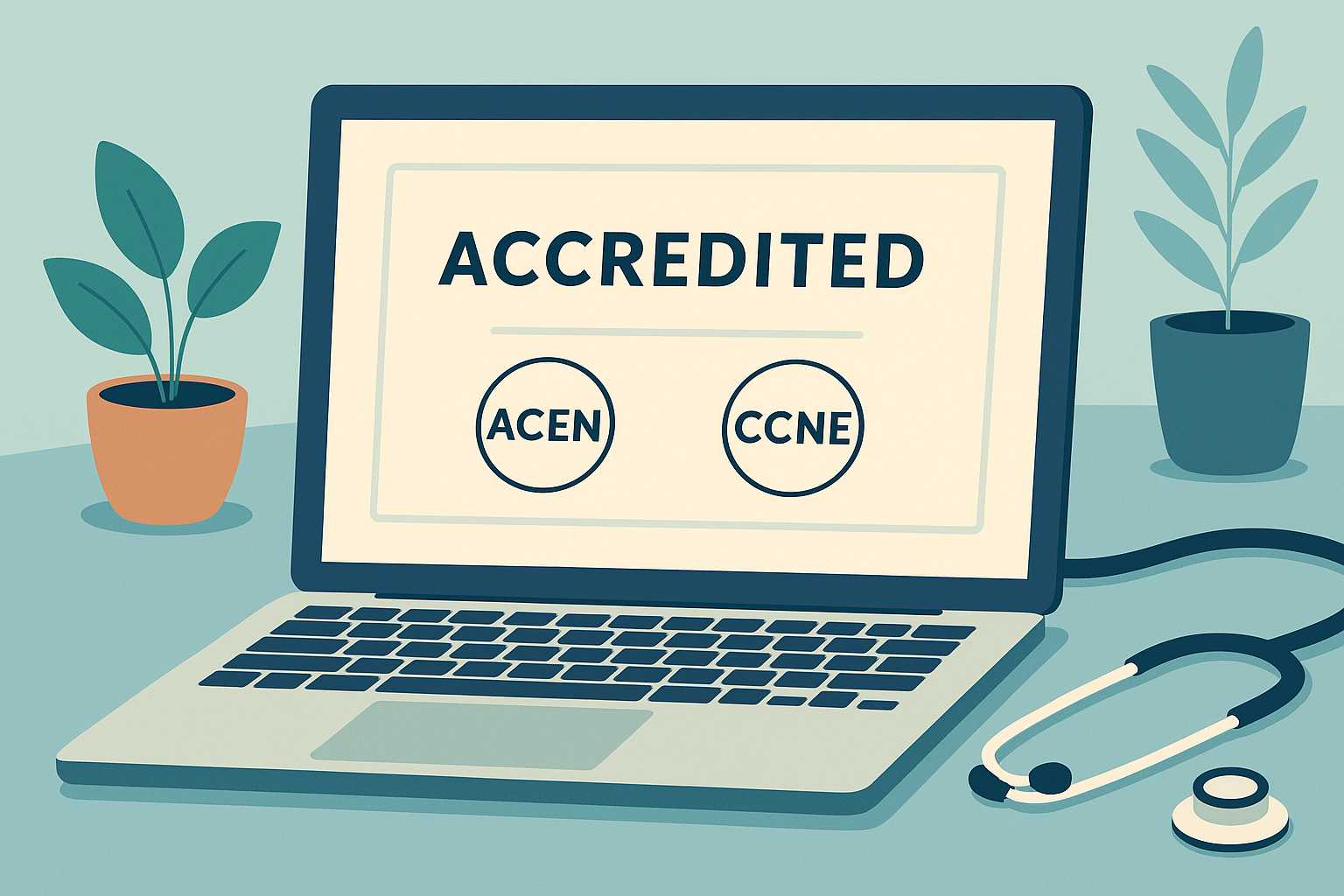
Two key accrediting bodies oversee nursing programs:
- ACEN, the Accreditation Commission for Education in Nursing
- CCNE, the Commission on Collegiate Nursing Education
You can explore national nursing education standards directly through the
👉 American Association of Colleges of Nursing (AACN)
Accreditation also impacts clinical placements, eligibility for financial aid, and your ability to sit for the NCLEX-RN exam. No matter how convenient or affordable a program seems, accreditation should be your non-negotiable requirement.
Admissions Requirements for Online Nursing Schools
Admissions expectations vary widely. Entry-level programs often look at high school coursework, prerequisite completion, and test scores. RN-to-BSN and graduate programs tend to evaluate your nursing license, clinical experience, and academic history.
Online programs are built for non-traditional learners, so don’t worry if your background isn’t “linear.” Many students enter nursing later in life, come from other professions, or return to school after years away from the classroom. That’s exactly who these online pathways were designed for.
Costs and Financial Aid for Online Nursing Programs
While tuition varies depending on school type and degree level, online students often save money on housing, transportation, meal plans, and campus fees. Most accredited online nursing programs qualify for federal financial aid, including grants, loans, and work-study. Many hospitals and healthcare employers also offer tuition assistance for nurses willing to stay on staff after graduation.

Because nursing is a high-demand field, scholarships—especially for BSN and graduate-level students—are more common than most people realize.
Are Online Nursing Degrees Respected by Employers?
Absolutely. Employers focus on your clinical competence, RN license, and readiness to provide patient care. Whether your coursework was delivered online or in a classroom does not affect your ability to get hired. A large and growing number of nurses currently working in hospitals completed their degrees through accredited online nursing schools.
If you’re curious about long-term job prospects, salary potential, and industry trends, the
👉 U.S. Bureau of Labor Statistics: Registered Nurse Overview
provides updated national data and projections.
Is an Online Nursing Program Right for You?
Online nursing programs aren’t easier—they’re more flexible. They’re designed for people who are motivated, disciplined, and managing responsibilities outside the classroom. If you’re a parent, a working healthcare professional, or someone changing careers later in life, online nursing education allows you to take the next step without pressing pause on everything else.
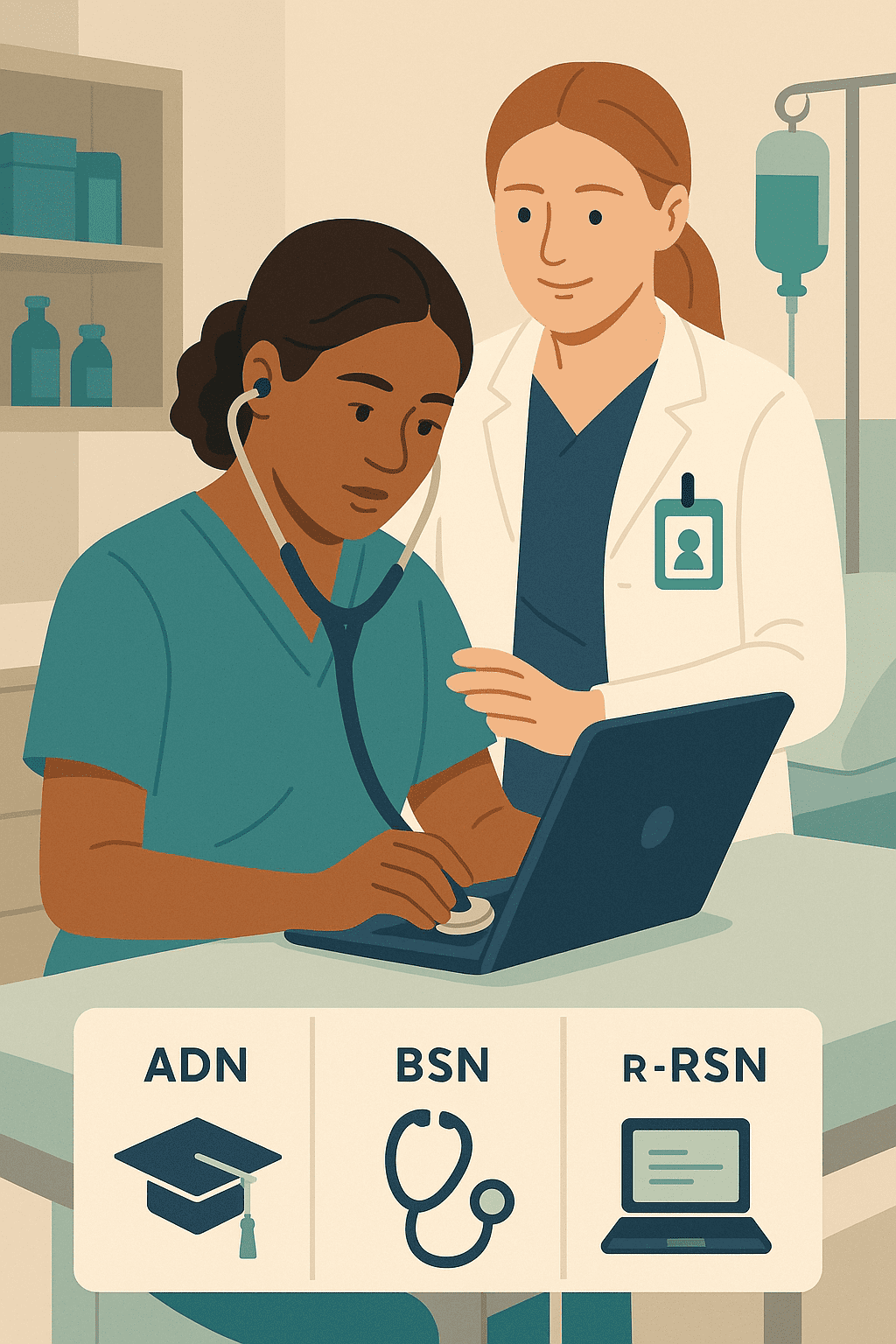
Choosing the right program comes down to balancing three things:
accreditation, flexibility, and your long-term nursing goals. With the rise of high-quality online pathways, more future nurses than ever are discovering that they can earn a respected nursing degree—without relocating, quitting their job, or rearranging their entire life.
FAQ: Online Nursing Programs
Can you become a nurse entirely online?
Not completely. While lectures, assignments, and exams can be completed online, all accredited nursing programs still require in-person clinical hours in approved healthcare settings. Some schools also require short on-campus skills labs.
Are online nursing programs accredited?
Yes—many online nursing programs are fully accredited by ACEN or CCNE. Accreditation ensures your education meets national standards and qualifies you for licensure, financial aid, and employment.
How long does an online nursing program take?
The timeline depends on the degree:
ADN: around 18–24 months
BSN: 3–4 years (shorter for accelerated options)
RN-to-BSN: 12–18 months
MSN/NP: 2–3 years
DNP: 3–4 years
Online programs are often more flexible, allowing students to progress faster or part-time.
How do clinical hours work for online students?
Clinical hours are completed in person at hospitals or clinics located near your home. Schools either help arrange placements or approve sites you propose. These hours are required for licensure.
Are online nursing degrees respected by employers?
Yes. Employers care more about accreditation, licensure, and clinical performance than whether your coursework was online. Accredited online programs are widely accepted in the nursing field.
What technology do I need for online nursing school?
Most programs require a computer, high-speed internet, webcam, headset, and occasionally proctored exam software. Some include virtual simulations that require updated system specs.