
If you’ve been searching for CNA classes near me, you’re likely ready to take the first step toward a rewarding healthcare career. Certified Nursing Assistants (CNAs) are in high demand across hospitals, nursing homes, and home health agencies — and local training programs can help you start quickly.
This guide explains how to find CNA programs near you, what to expect in class, costs, flexible options like evening or weekend training, and tips for choosing the right school. By the end, you’ll have a clear roadmap to becoming a CNA in your community.
Why Choose Local CNA Classes?
When it comes to healthcare training, proximity matters. Enrolling in CNA classes near allows you to save time and money, while building professional connections in your own community. Local programs also make it easier to balance family or work commitments since classes and clinicals are typically close to home.
Taking CNA training near me has unique advantages:
- Convenient schedules: Many programs offer evenings, weekends, or hybrid learning.
- Hands-on practice nearby: Skills labs and clinical rotations are held at local facilities.
- Job opportunities: Training locally often connects you to employers in your area.
- Lower costs: Community colleges and workforce programs may offer reduced tuition or free CNA classes.
According to the U.S. Bureau of Labor Statistics, employment for nursing assistants is projected to grow steadily, with thousands of new positions opening each year due to rising healthcare needs.
What to Expect in CNA Classes
Before enrolling, it’s important to know what you’ll actually learn in a CNA program near me. CNA training is designed to prepare you with the essential skills and knowledge needed to work in direct patient care. You’ll combine classroom study with practical training so you’re fully prepared for the state exam and the realities of healthcare work. For a broader look at program types and requirements, check out our CNA training overview guide.
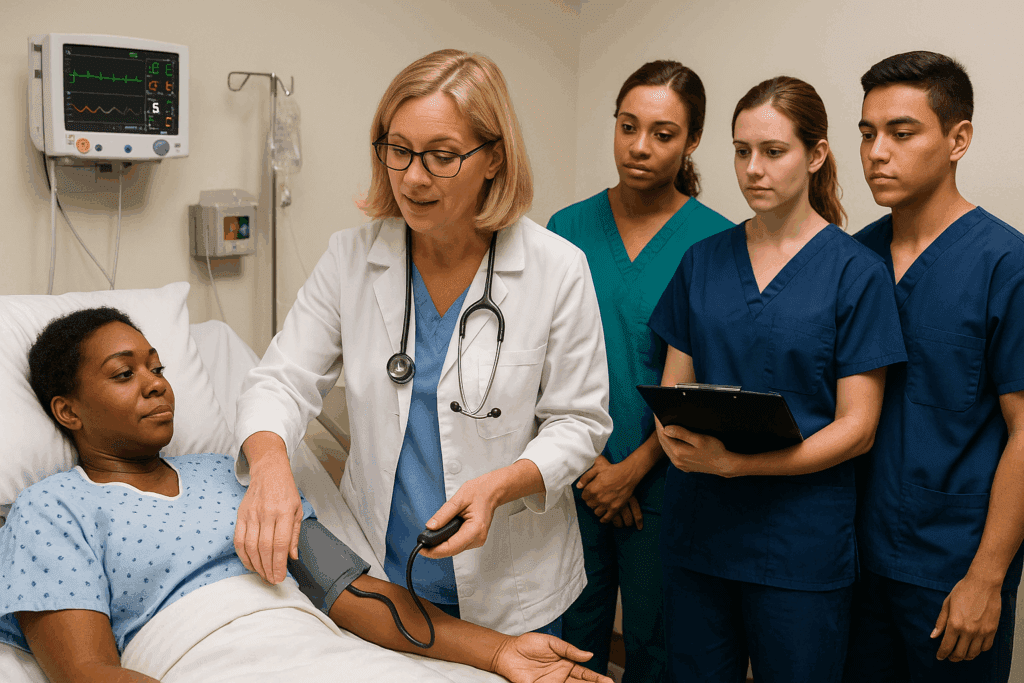
Every CNA certification class near me combines three essential parts of training:
- Classroom learning – Covers nursing fundamentals, anatomy, infection control, patient rights, and communication skills.
- Skills lab practice – Students practice CNA duties like transferring patients, measuring vital signs, and personal care in a simulated lab environment.
- Clinical training – Supervised experience in real healthcare facilities such as nursing homes, hospitals, or assisted living centers.
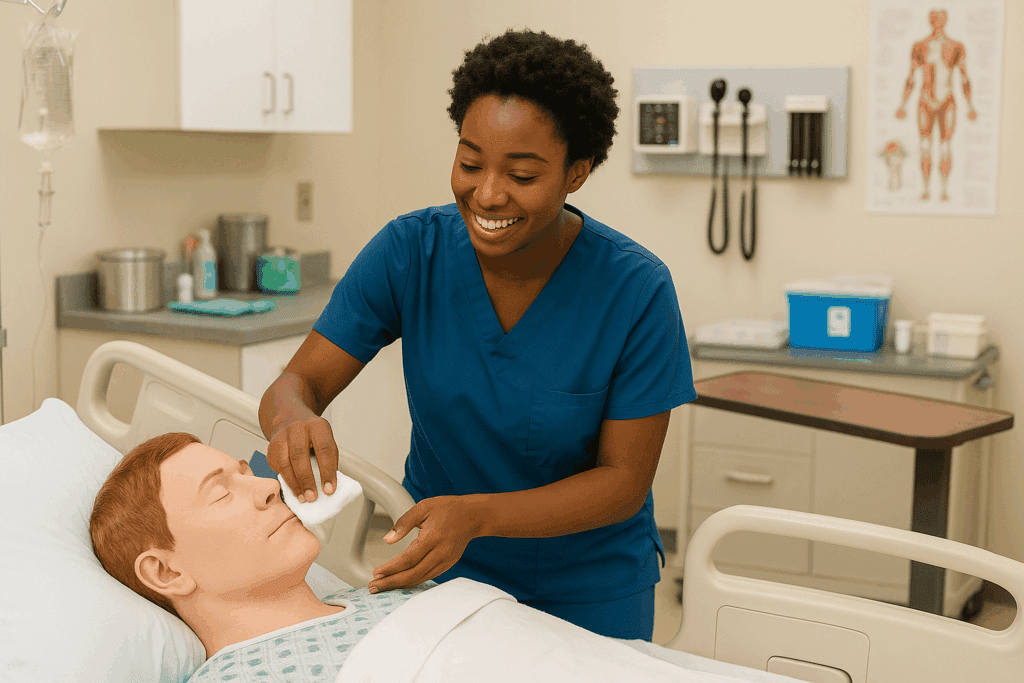
Most CNA classes last 4–12 weeks, depending on whether you attend full-time, part-time, or evenings only.
How to Find CNA Classes Near Me
Not all programs are created equal, and choosing the right one can impact both your training experience and your career prospects. When searching for CNA schools, it helps to follow a systematic approach to avoid wasting time and money. Below are some proven steps to find programs that are both accredited and convenient.
1. Search by location
Use terms like “CNA training near me” or “CNA certification programs in [City, State]” in Google and check the map listings.
2. Verify approval
Only choose state-approved CNA classes. Without state approval, you cannot sit for the certification exam.
3. Compare program details
- Cost: Tuition ranges from $500–$2,000 depending on the provider.
- Schedule: Some schools offer accelerated or evening options.
- Duration: Full-time programs may finish in just 4 weeks; part-time may take 3 months.
4. Ask about clinical partners
Schools that partner with local nursing homes or hospitals often provide stronger job placement opportunities.
5. Read reviews and visit the site
Look for reviews on Google and tour the facility if possible. Evaluate class size, lab equipment, and instructor support.
CNA School Finder Tool
CNA Class Costs and Financial Aid Options
Cost is often the deciding factor for students searching for CNA classes. While tuition varies, understanding the range of expenses and available financial support helps you plan ahead. Don’t overlook options like employer sponsorships or state-funded programs that can dramatically reduce your out-of-pocket cost.
Many students ask: “How much do CNA classes near me cost?”
- Tuition typically runs $500–$2,000.
- Some nursing homes offer free CNA training if you agree to work there after graduation.
- Check for workforce development grants, scholarships, or state tuition assistance programs.
- Ask schools about payment plans.
Flexible CNA Class Options (Evening, Weekend, Online)
Not every student can commit to a rigid, daytime schedule. Fortunately, many CNA courses are designed with flexibility in mind. Whether you’re balancing work, family, or other commitments, you’ll find training that fits your lifestyle.
- Weekend CNA classes – Great for working adults.
- Evening CNA classes – Perfect if you work daytime shifts.
- Online CNA classes – Hybrid programs allow classroom learning online with in-person labs and clinicals.
- Short CNA programs – Accelerated 4-6 week classes for faster certification.
Clinical Training and Job Placement
Completing the classroom portion is only part of the CNA journey. Strong CNA training programs with clinicals provide hands-on experience with patients, which is essential for developing real-world skills. Even better, many schools assist with job placement to help you transition quickly into the workforce.
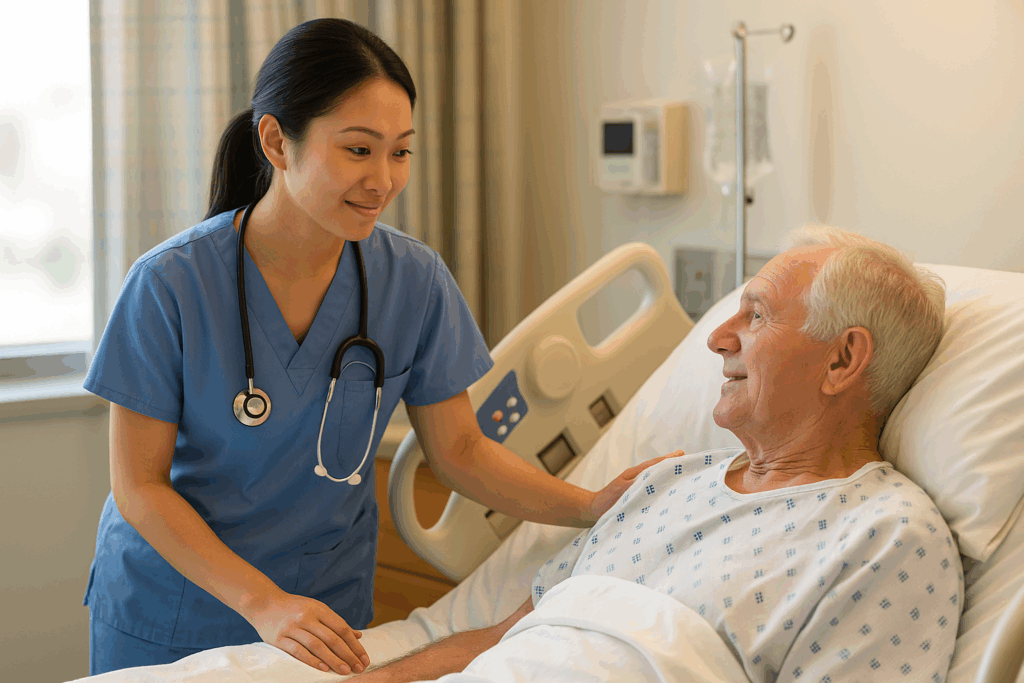
- Clinicals give you confidence and competence before starting your first job.
- Partnerships with healthcare facilities often lead to direct job offers after graduation.
- CNA programs with job placement can save you time and increase your chances of immediate employment.
Steps After Completing CNA Classes
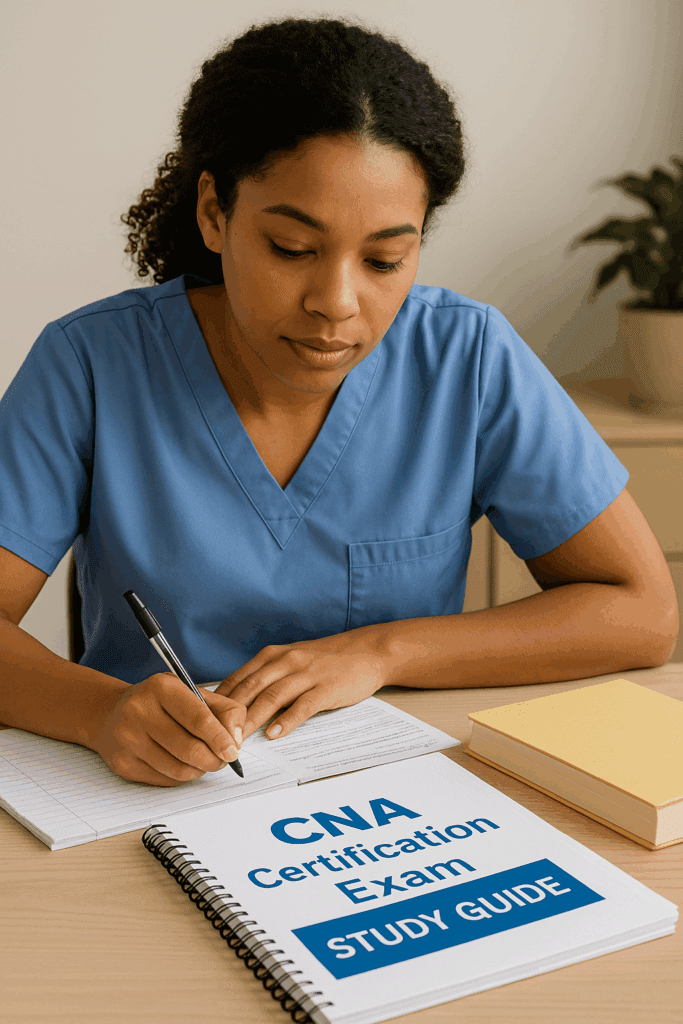
Graduating from a program is just the beginning. Once you complete your CNA classes, you’ll need to take the next steps to become fully certified and start working. This process is fairly straightforward and ensures that you’re legally recognized to provide patient care. Before you can start working, you’ll need to pass the state exam — our CNA certification exam guide breaks down what to expect and how to prepare.
- Take the CNA certification exam (written + skills). To become fully certified, you’ll need to pass the state exam, which is typically aligned with the National Nurse Aide Assessment Program (NNAAP) administered across many states.
- Get listed on your state’s nurse aide registry.
- Apply for entry-level nursing roles in local hospitals, nursing homes, and home care.
- Use CNA work as a stepping stone toward advanced nursing education (LPN, RN).
Students can schedule their exam and access study resources through providers like Credentia, which manages CNA testing in many U.S. states. Choosing a nursing program involves more than just selecting a degree. Our guide on how to choose the right nursing school explains what to look for beyond curriculum and cost.
FAQs About CNA Classes
How much do CNA classes cost?
Most programs cost $500–$2,000, but free or subsidized training may be available.
How long are CNA classes?
Most programs last 4–12 weeks, depending on schedule type.
Are there free CNA classes?
Yes, some nursing homes and workforce agencies provide free CNA training in exchange for a work contract.
Can I take CNA classes online near me?
Yes, hybrid options exist — coursework online plus in-person labs and clinical rotations.
Where can I find CNA programs with job placement near me?
Look for community colleges, vocational schools, or healthcare systems that advertise job placement support.
Start Your CNA Journey Today
If you’re serious about becoming a Certified Nursing Assistant, start by searching CNA classes near me and contacting approved local schools. Compare tuition, schedules, and job placement support before enrolling. The sooner you begin, the sooner you can start working in healthcare. Many CNAs go on to become Licensed Practical Nurses (LPNs) or Registered Nurses (RNs). If that’s your goal, explore our nursing school pathways for next steps.
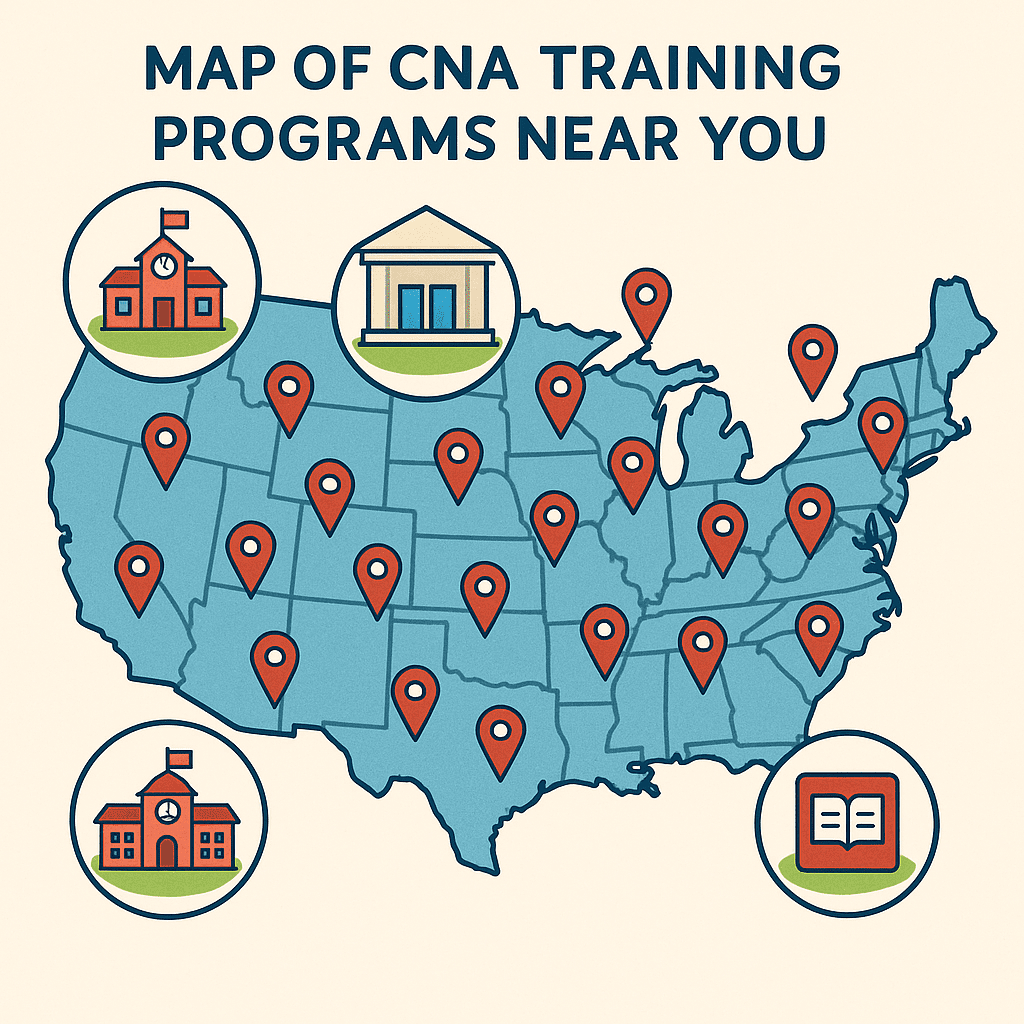
📍 Next step: Use our program finder tool below to locate accredited CNA training in your city or state.
Ready to take the next step? Enroll in a CNA class near you today and start building your healthcare career.