
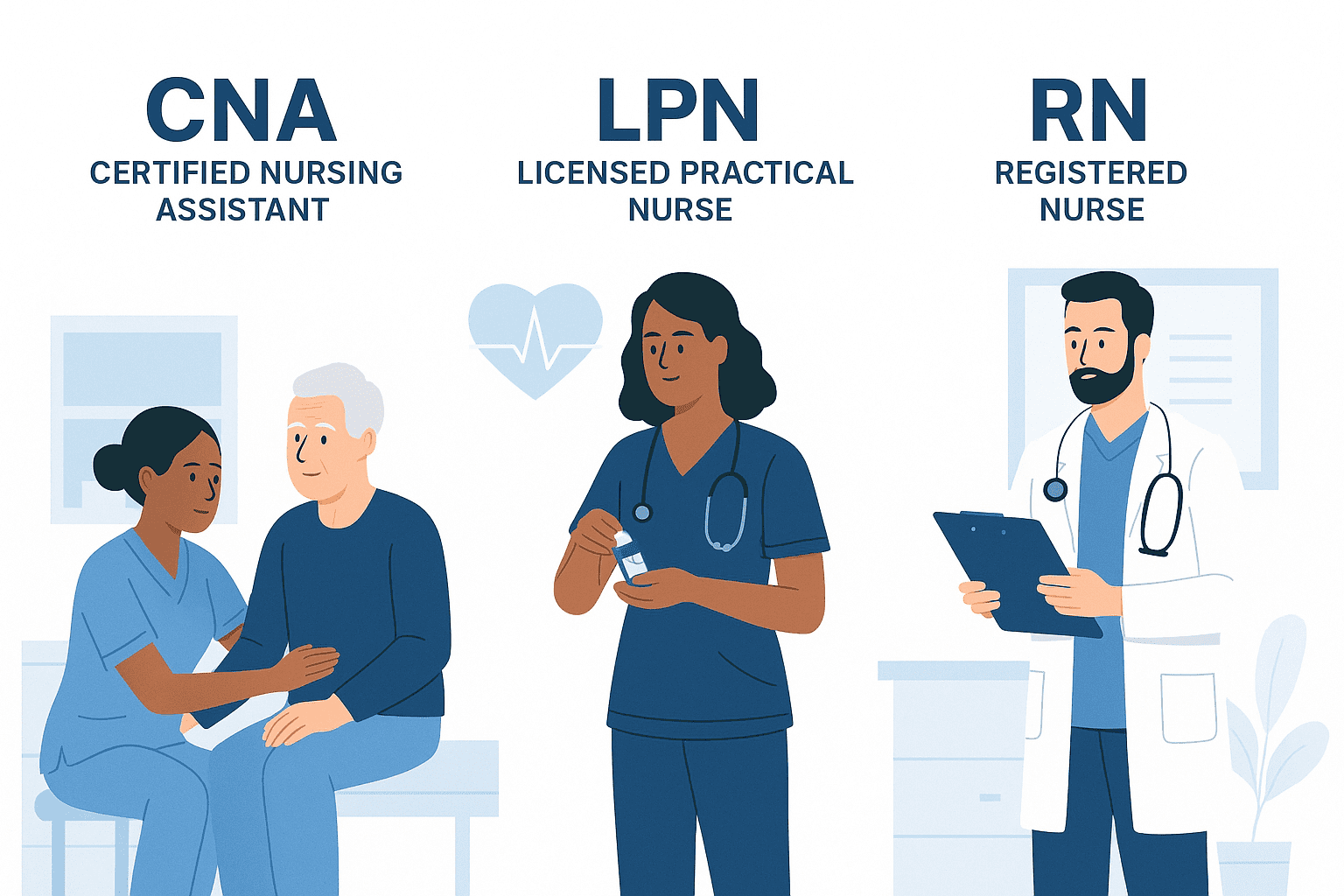
If you’re considering a career in nursing, you’ve likely come across the terms CNA, LPN, and RN. While all three roles are essential to the healthcare system, they differ in terms of responsibilities, education requirements, and career opportunities. Understanding the difference between CNA LPN and RN programs is the first step in choosing the path that best aligns with your career goals.
Table of Contents
Certified Nursing Assistant (CNA)
A Certified Nursing Assistant (CNA) is often the entry point into the nursing profession. CNAs provide hands-on care to patients under the supervision of licensed nurses. Typical duties include assisting with daily activities such as bathing, feeding, mobility, and monitoring vital signs. CNAs are the “frontline caregivers,” ensuring patients are comfortable and their basic needs are met.
Education & Training:
CNA programs are relatively short, usually taking 4–12 weeks. These programs are offered by community colleges, vocational schools, and some healthcare facilities. Students complete both classroom instruction and clinical practice. After training, candidates must pass a state competency exam to become certified.
Career Outlook:
According to the U.S. Bureau of Labor Statistics, employment of CNAs is projected to grow steadily due to an aging population. While salaries are lower compared to LPNs and RNs, CNA roles are often seen as stepping stones to more advanced nursing positions.
Learn more about starting as a CNA with our CNA Programs Guide.
Licensed Practical Nurse (LPN)
Licensed Practical Nurses (LPNs), also known as Licensed Vocational Nurses (LVNs) in some states, play a more advanced role than CNAs. They provide basic medical care such as administering medications, monitoring patient health, changing dressings, and updating medical records. LPNs work under the supervision of registered nurses (RNs) and doctors.
Education & Training:
LPN programs typically take 12–18 months to complete. Training includes classroom coursework in anatomy, pharmacology, and nursing fundamentals, along with supervised clinical practice. After finishing the program, students must pass the NCLEX-PN exam to obtain licensure.
Career Outlook:
LPNs earn higher salaries than CNAs and can work in diverse settings including hospitals, long-term care facilities, and physician’s offices. While opportunities are strong, some hospitals are shifting toward hiring more RNs, which makes continuing education an attractive option for many LPNs.
Explore more details in our LPN Programs Overview.
Registered Nurse (RN)
Registered Nurses (RNs) hold the most responsibility among the three roles. They coordinate patient care, administer medications, perform diagnostic tests, and educate patients and families about health conditions. RNs also supervise LPNs and CNAs, acting as leaders within the nursing team.
Education & Training:
There are multiple educational pathways to become an RN:
- Associate Degree in Nursing (ADN): Typically 2 years.
- Bachelor of Science in Nursing (BSN): Typically 4 years, offering broader career opportunities.
Graduates must pass the NCLEX-RN exam to gain licensure. Many employers now prefer or even require a BSN due to the growing complexity of healthcare.
Career Outlook:
RNs enjoy the strongest job prospects and salaries of the three. According to the American Association of Colleges of Nursing, demand for RNs continues to rise due to physician shortages and an increased focus on preventive care. RNs can also specialize in areas such as pediatrics, oncology, or critical care.
Learn how to start your journey with our RN Programs Guide.
CNA vs LPN vs RN: Key Differences at a Glance
Here’s a quick comparison of the difference between CNA LPN and RN programs and roles:
| Role | Education Length | Licensing Exam | Typical Duties | Average Salary* |
|---|---|---|---|---|
| CNA | 4–12 weeks | State exam | Daily care, vital signs, patient comfort | $35,000 |
| LPN | 12–18 months | NCLEX-PN | Medications, wound care, health monitoring | $50,000 |
| RN | 2–4 years | NCLEX-RN | Patient care, leadership, care planning | $75,000+ |
*Salaries vary by state, employer, and experience level.
Which Path Should You Choose?
Choosing between CNA, LPN, and RN depends on your career goals, financial situation, and timeline:
- CNA: Best for those wanting to enter healthcare quickly with minimal training.
- LPN: Ideal for those who want more responsibility and better pay without committing to a full degree.
- RN: The best choice for long-term career growth, higher salaries, and leadership opportunities.
Learn how LPN salaries compare with CNA, RN, and BSN roles in our Nursing Salaries by Degree article.
Many nurses start as CNAs or LPNs and later bridge into RN programs. This step-by-step approach allows you to gain work experience, earn income, and gradually advance your education.
If you’re considering a flexible path, check out our guide on Entry-Level Nursing Careers: Roles, Salaries, and Growth.
CNA LPN and RN Roles
Understanding the difference between CNA LPN and RN roles helps you make an informed decision about your future in nursing. Each position plays a vital part in patient care, and all three pathways can lead to rewarding careers in healthcare. Whether you’re just starting out or planning to advance, there’s a program that fits your goals and lifestyle.