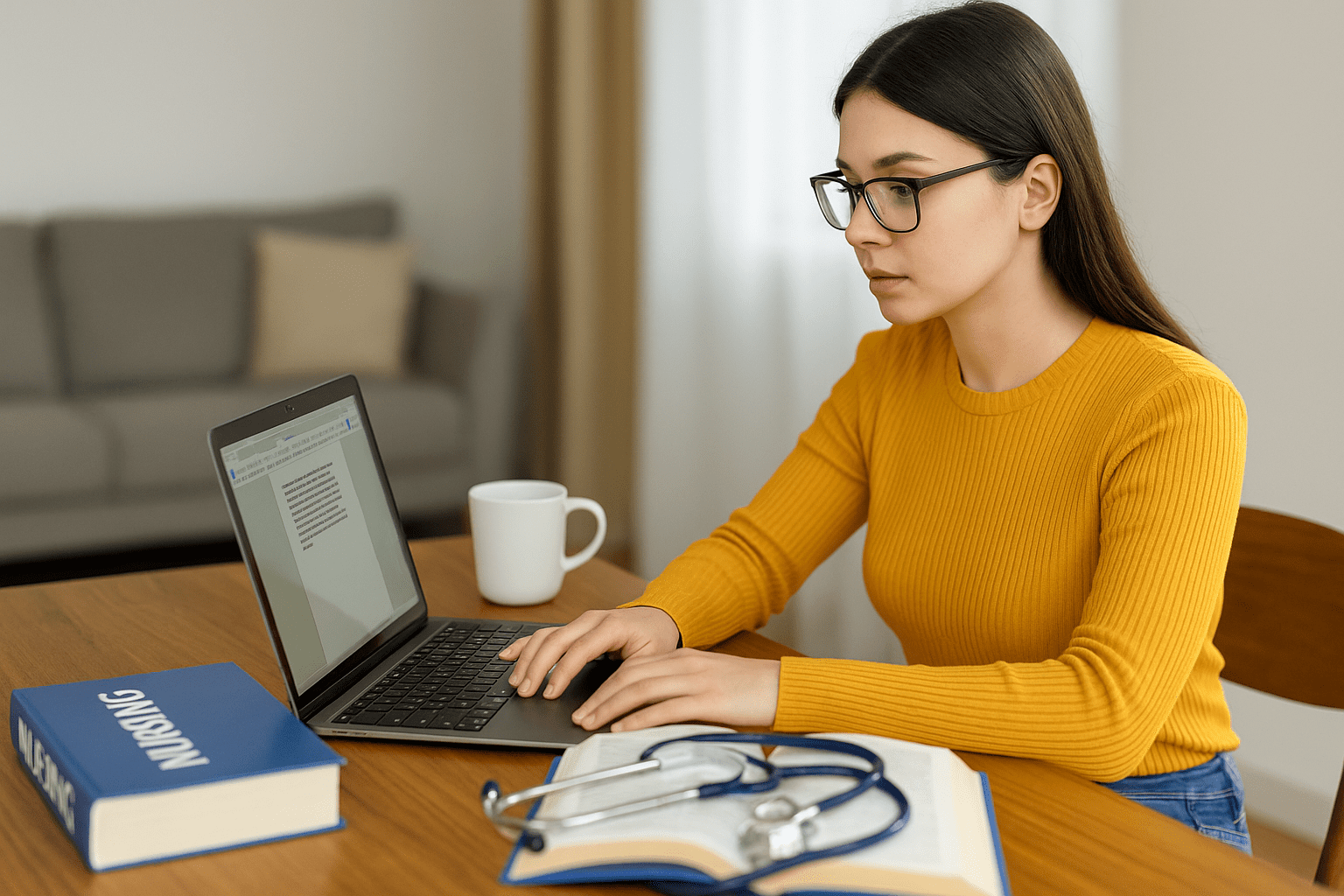
If you’re considering a career in healthcare but need the flexibility to balance school with work, family, or other responsibilities, online nursing programs could be the solution. With more colleges and universities expanding their distance learning options, it’s now possible to complete large portions of your nursing education online. But before you commit, it’s important to understand how online programs work, what degrees are available, and whether you can truly become a nurse online.
Table of Contents
Can You Become a Nurse Online?
One of the most common questions future students ask is: “Can you become a nurse online?” The short answer is yes—with a catch. While coursework in subjects like anatomy, pharmacology, and nursing theory can be completed virtually, nursing is a hands-on profession that requires clinical experience. That means even if most of your classes are online, you’ll still need to complete supervised clinical hours in a healthcare setting.
If you’re just starting out, it’s worth exploring your options with entry-level nursing programs. Many of these programs include online coursework combined with local clinical placements, giving you the best of both worlds.
Types of Online Nursing Programs
1. Online ADN Programs
Online Associate Degree in Nursing (ADN) programs are one of the fastest ways to begin a career as a registered nurse (RN). Typically lasting two to three years, online ADN programs combine online classes with in-person labs and clinical rotations. Graduates are eligible to sit for the NCLEX-RN exam, the national licensing test for registered nurses.
Before applying, it’s smart to prepare with resources like our Nursing School Application Checklist, which walks you through prerequisites, required documents, and key deadlines.
2. Online BSN Programs
For students seeking a bachelor’s degree, many schools offer online Bachelor of Science in Nursing (BSN) programs. Some are designed for first-time nursing students, while others are RN-to-BSN bridge programs tailored for current nurses who want to advance their credentials. A BSN often opens the door to higher salaries and greater career mobility.
3. Online MSN and Advanced Practice Programs
Once you’ve earned your RN license, you may choose to pursue graduate-level education online. Master of Science in Nursing (MSN) and Doctor of Nursing Practice (DNP) programs are increasingly offered in flexible, distance-learning formats. These programs prepare you for advanced roles like nurse practitioner, nurse educator, or nurse administrator.
What to Expect from Online Classes
Online nursing programs use a mix of learning tools, such as recorded lectures, discussion boards, live video sessions, and interactive case studies. Students often appreciate the flexibility of logging in at convenient times, but keep in mind that courses are just as rigorous as in-person classes. Expect weekly assignments, exams, and group projects that require strong time-management skills.
As you progress, you’ll want to begin preparing for licensure. Tools like the 30-Day NCLEX Study Planner can help you stay organized and confident leading up to the big exam.
Clinical Requirements and Hands-On Training
Even though most academic content is online, clinical practice is not. Each state’s board of nursing requires a set number of supervised clinical hours for RN licensure. Depending on your program, you may complete these rotations at hospitals, long-term care facilities, or community clinics near your home. Faculty members and preceptors will evaluate your performance just as they would in a traditional program.
Costs and Financial Aid
Tuition for online nursing programs varies widely depending on the type of degree and the institution. Online ADN programs are generally the most affordable, while BSN and MSN programs require a larger investment. The good news is that federal financial aid, scholarships, and employer tuition reimbursement may be available. Before enrolling, compare tuition rates, fees, and hidden costs like travel to clinical sites or technology requirements.
Career Outcomes and Job Outlook
Graduates of online nursing programs enjoy the same career opportunities as those who attend on-campus programs. According to the Bureau of Labor Statistics, registered nursing jobs are projected to grow 6% through 2032, faster than the average for all occupations. With the U.S. healthcare system facing nursing shortages, qualified nurses—whether trained online or on campus—will continue to be in high demand.
For those interested in advanced practice roles, the American Association of Colleges of Nursing highlights strong demand for nurse practitioners, nurse midwives, and clinical nurse specialists. Online graduate programs are a practical way to prepare for these expanding career paths.
To learn more about where your degree could take you, browse our nursing career guides, which outline specialties, salary ranges, and job growth trends.
Online Nursing Programs Offer Flexibility
Online nursing programs offer the flexibility to balance education with real-life commitments while preparing you for a stable and rewarding career. Although clinical requirements still need to be met in person, the ability to complete coursework online makes nursing more accessible than ever before. By carefully researching accredited schools, weighing costs, and considering career outcomes, you’ll be able to find the program that sets you on the path to becoming a nurse—even if you’re starting with no prior experience.